Understanding Ring Size Systems
Different countries use different ring size systems. The most common systems used in jewelry making are US sizes, UK alphabet sizes, European circumference sizes and inside diameter measurements in millimeters.
Professional jewelers often work directly in millimeters because inside diameter measurements are more precise and easier to use for fabrication and ring blank calculations.
Ring Size Conversion Chart
| US Size | UK Size | EU Size | Inside Diameter |
|---|---|---|---|
| 4 | H | 47 | 14.9 mm |
| 5 | J 1/2 | 49 | 15.7 mm |
| 6 | M | 52 | 16.5 mm |
| 7 | O | 54 | 17.3 mm |
| 8 | Q | 57 | 18.1 mm |
| 9 | R 1/2 | 59 | 18.9 mm |
| 10 | T 1/2 | 62 | 19.8 mm |
| 11 | V 1/2 | 64 | 20.6 mm |
| 12 | Y | 67 | 21.4 mm |
Why Jewelers Use Millimeters
Ring size numbers are useful for customers, but jewelers and metalsmiths often work directly with inside diameter measurements.
Millimeters are more accurate when calculating ring blank length, sizing bezels, creating templates and fabricating custom rings.
Common Ring Size Mistakes
- Measuring wide bands using narrow sizing rings
- Ignoring comfort-fit interiors
- Using inaccurate printable ring sizers
- Assuming every sizing standard is identical
- Forgetting metal thickness in ring blank calculations
How To Measure Ring Size Accurately
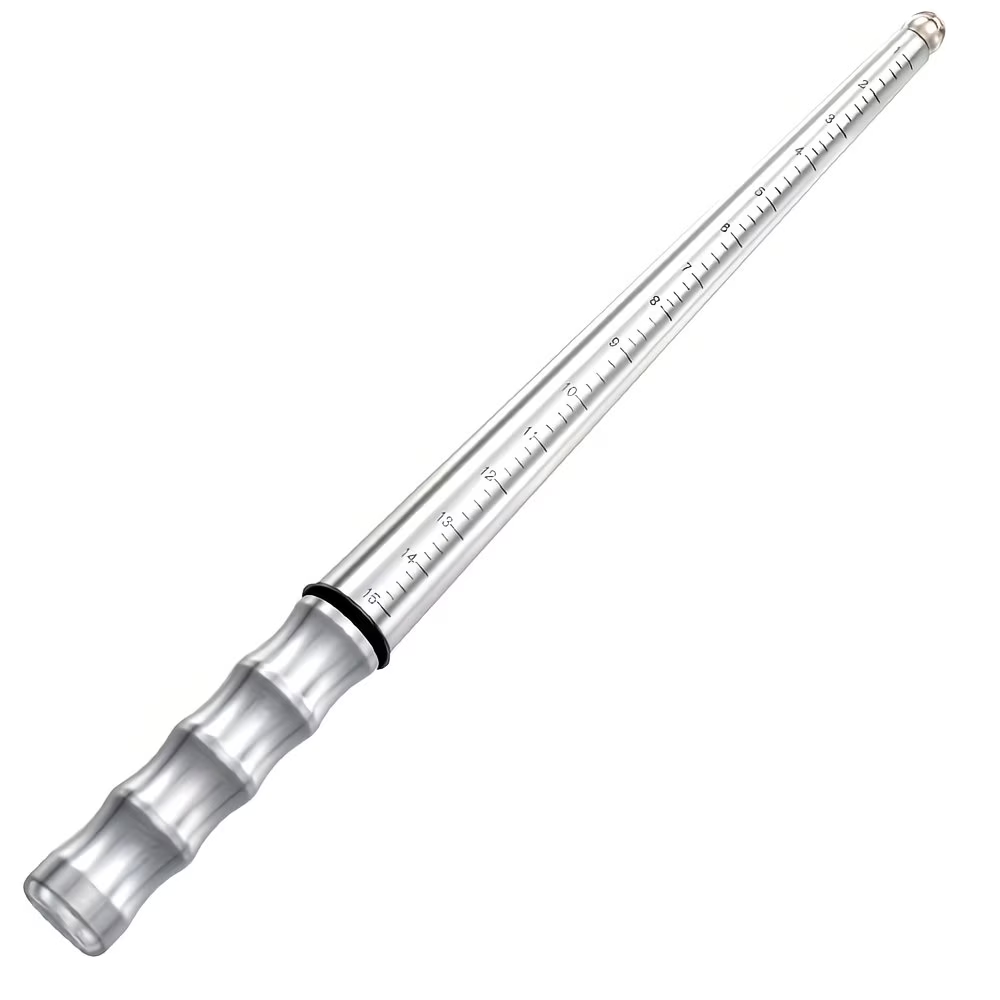
The most accurate method is usually to measure an existing ring using calipers or a mandrel and compare the inside diameter directly in millimeters.
Printable ring sizers can work, but printer scaling errors often create inaccurate measurements unless the print scale is verified.
Use The Jewelry Calculator
Use the Jewelry Calculator to generate ring blank lengths, templates and jewelry fabrication layouts directly in your browser.