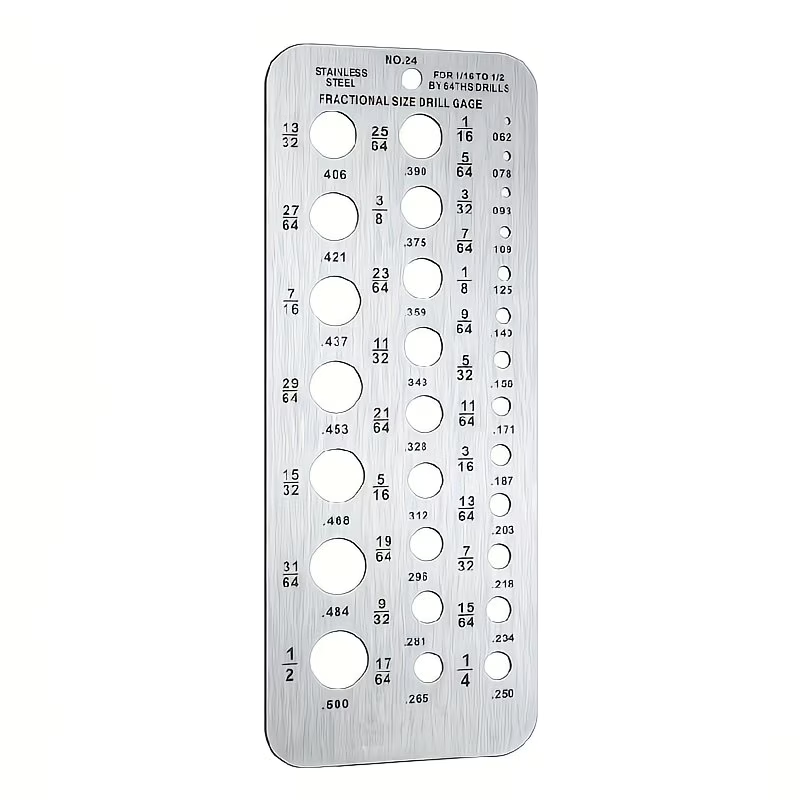
Why Metal Gauge Matters In Ring Making
Metal gauge affects almost every part of ring making. It changes how strong the ring feels, how easy it is to bend, how much filing is needed, how comfortable the finished band becomes and how accurately you need to calculate the ring blank length.
A ring made from metal that is too thin may feel weak, bend out of shape or wear down too quickly. A ring made from metal that is too thick may be difficult to form, harder to solder cleanly and uncomfortable unless the edges are shaped properly.
Quick Ring Gauge Reference
The best gauge depends on the ring style, metal type and how the ring will be worn. This table gives practical starting points for common handmade ring projects.
| Gauge | Approx. Thickness | Best For | Workshop Notes |
|---|---|---|---|
| 24 ga | 0.511 mm | Very light decorative rings | Too thin for most everyday ring bands unless supported by design. |
| 22 ga | 0.644 mm | Light rings, decorative overlays, thin wrap elements | Easy to form but may feel flexible in wider or unsupported bands. |
| 20 ga | 0.812 mm | Light ring bands, small stacking rings, simple silver bands | A common starting point for lightweight rings and beginner projects. |
| 18 ga | 1.02 mm | Everyday rings, stronger bands, small signet-style forms | Good balance between strength, comfort and workability. |
| 16 ga | 1.29 mm | Heavy rings, wider bands, stronger structural designs | Requires more force to form and more attention to edge finishing. |
| 14 ga | 1.63 mm | Heavy bands, cuffs, forged rings, bold statement pieces | Can be difficult to bend cleanly without stronger tools and annealing. |
Best Gauge For Simple Ring Bands
For a simple handmade ring band, many jewelers start around 20 gauge to 18 gauge. These thicknesses are usually strong enough for light to medium rings while still being manageable with normal forming tools.
A narrow stacking ring can often be made from thinner metal than a wide flat band. Wider rings usually need more thickness because the larger surface can feel flimsy if the sheet is too light.
- Thin stacking rings: 20 ga can work well for light designs.
- General ring bands: 18 ga is often a stronger everyday choice.
- Wide bands: 18 ga or 16 ga usually feels more solid.
- Heavy forged rings: 16 ga, 14 ga or thicker may be appropriate.
Sheet Gauge vs Wire Gauge For Rings
Rings can be made from sheet metal, rectangular strip, half-round wire, square wire or round wire. Gauge can describe both sheet thickness and wire diameter, but the way the metal behaves at the bench can be different.
Sheet metal gives you control over band width and thickness. Wire gives you a ready-made profile, which can be useful for stacking rings, decorative bands and heavier forged ring forms.
How Ring Width Changes The Gauge Choice
Ring width changes how thick the metal needs to be. A very narrow ring can feel strong even when made from lighter metal, while a wide ring can feel weak if the metal is too thin.
Wide bands also need more careful forming. Thick, wide metal is harder to bend evenly and often benefits from annealing during the forming process. Thin, wide metal is easier to form, but it may dent, flex or feel less substantial.
- 1–2 mm wide bands: lighter gauges can work if the ring is not heavily worn.
- 3–5 mm wide bands: 20 ga to 18 ga is a practical starting range.
- 6 mm and wider bands: 18 ga to 16 ga usually gives a more solid feel.
- Heavy statement bands: 16 ga or thicker may be needed for strength and presence.
How Metal Type Affects Gauge Choice
Different metals behave differently at the same thickness. Sterling silver, fine silver, copper, brass, gold and other jewelry metals do not all feel the same when formed, soldered or worn.
Softer metals may need extra thickness or support if the ring must hold its shape. Harder metals may feel stronger at the same gauge, but they can also be more difficult to bend and shape.
Gauge And Ring Blank Length
Metal thickness affects the ring blank length calculation. A thicker ring blank bends around a larger neutral line than a thin one, so the thickness must be included when calculating how long to cut the strip.
This is why millimeters are more reliable than gauge numbers when using a ring blank formula. The actual measured thickness gives a better result than assuming the gauge is exact.
Measure The Metal Before Cutting
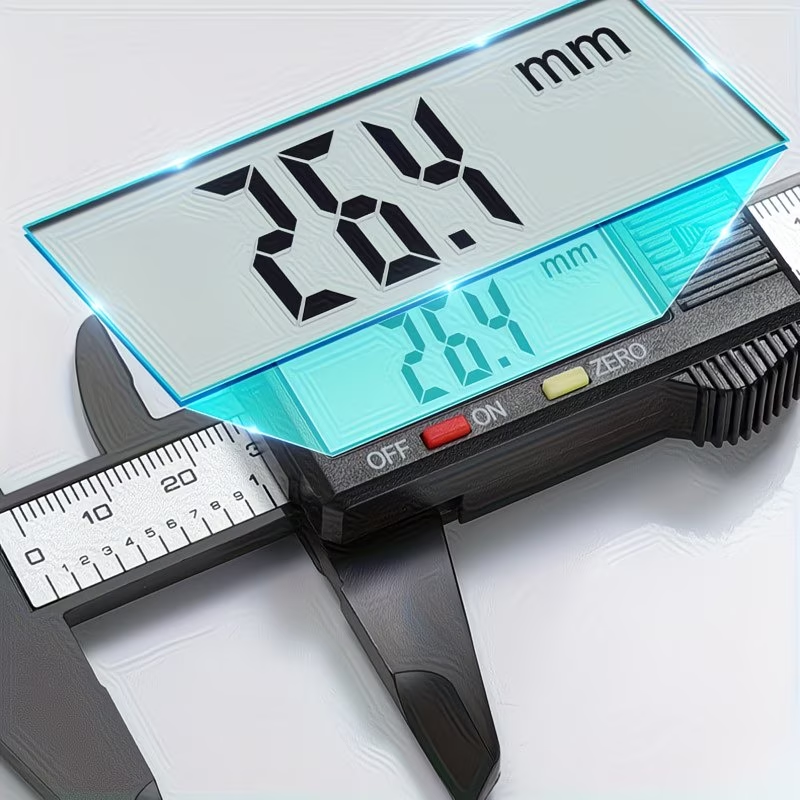
Metal sold by gauge is not always exactly the same thickness as a chart value. Rolling, supplier tolerances, polishing and previous workshop work can all change the actual measurement.
Before cutting a ring blank, measure the sheet or wire with digital calipers. Use that measured value in millimeters for calculations, especially when making fitted rings, wide bands or rings that need to match a specific size.
- Measure the actual metal thickness in millimeters.
- Check the intended ring width before choosing the gauge.
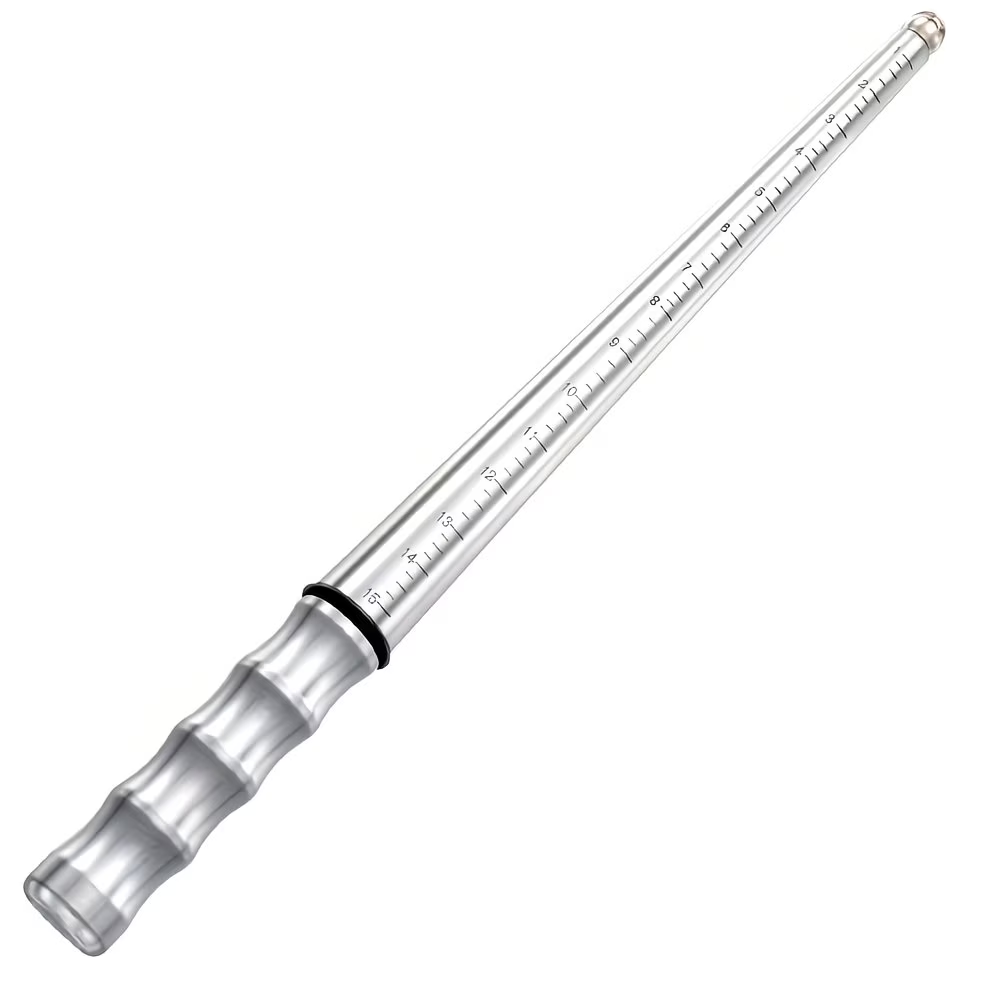
- Use a ring mandrel to confirm forming and final size.
- Allow extra material if the design needs filing, shaping or heavy finishing.
Beginner-Friendly Gauge Choices
If you are learning ring making, choose a gauge that is strong enough to make a wearable ring but not so thick that forming becomes frustrating.
For many beginner silver ring projects, 20 gauge or 18 gauge sheet is easier to manage than very heavy stock. Once you are comfortable with sawing, annealing, forming, soldering and finishing, thicker gauges become easier to control.
Common Mistakes When Choosing Ring Gauge
- Choosing only by gauge number: Always check the actual millimeter thickness.
- Using metal that is too thin for a wide band: Wide rings need more support.
- Ignoring comfort: Thick rings need softened edges and careful finishing.
- Forgetting the blank length calculation: Metal thickness changes the needed strip length.
- Skipping annealing: Heavy ring blanks are much harder to form when work-hardened.