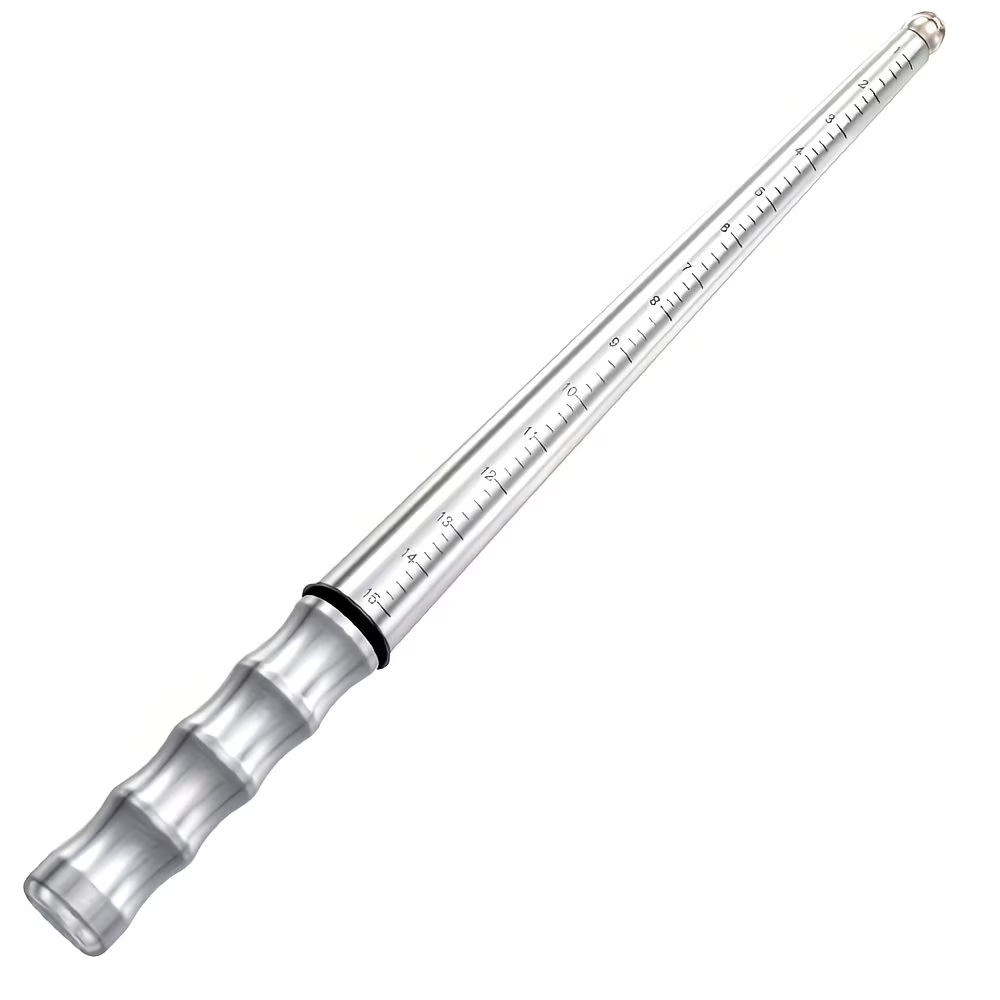
What Is A Ring Mandrel?
A ring mandrel is a tapered sizing tool used to measure, shape and round rings during jewelry fabrication. Most mandrels include engraved sizing marks that allow jewelers to check the approximate ring size directly on the tool.
Ring mandrels are commonly used during ring making, soldering, sizing adjustments, forming and final finishing. They are one of the most useful workshop tools for handmade jewelry fabrication.
Why Ring Mandrels Matter In Jewelry Making
Ring sizing is not only about finding a number. The ring also needs to feel correct on the finger after forming, soldering and finishing.
A ring mandrel helps jewelers:
- Measure ring size
- Round distorted rings
- Check inside diameter
- Shape ring blanks during fabrication
- Compare wide and narrow ring fits
- Confirm final sizing before polishing
Even simple handmade rings usually pass over a mandrel several times during fabrication.
How To Measure Ring Size On A Mandrel
Slide the ring onto the mandrel carefully until it stops naturally without force. The correct reading is usually taken at the center of the ring band where the metal aligns with the engraved sizing marks.
If the ring is tilted, oval or uneven, the reading may not be accurate. Always check that the ring sits level on the mandrel.
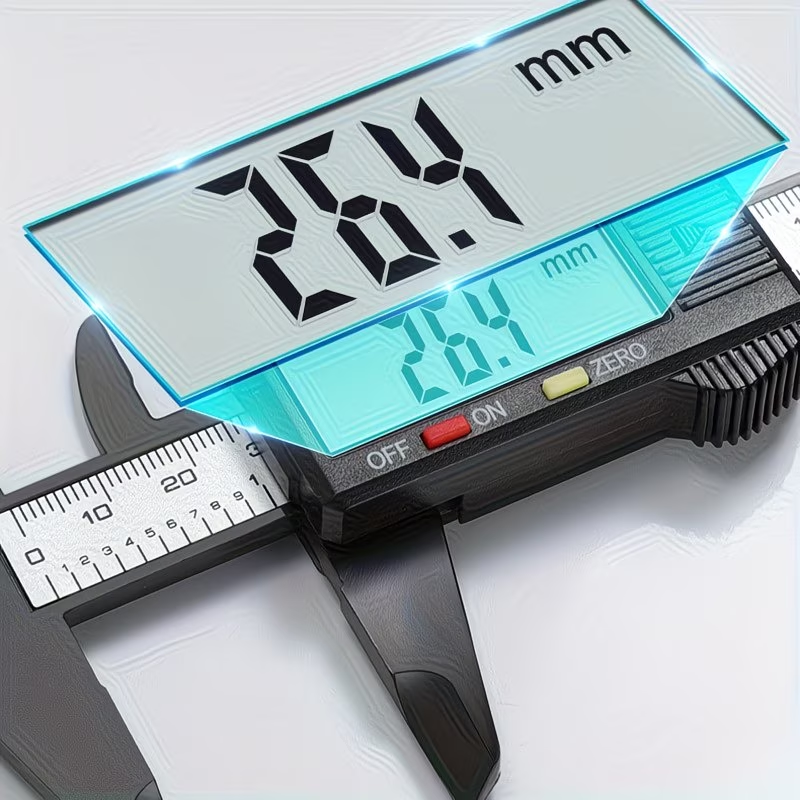
Where To Read The Size On A Ring Mandrel
Different jewelers read ring mandrels slightly differently, which can create confusion. In most workshop situations, the ring size is read where the inside edge of the ring meets the sizing line on the mandrel.
Wider rings may visually cover more of the sizing marks, so consistency is important. Use the same reading method throughout the project for better accuracy.
Wide Rings Feel Different On A Mandrel
Wide rings usually feel tighter on the finger than narrow rings, even if they technically measure the same size on a mandrel.
This happens because wider bands contact more skin and create more friction over the finger and knuckle. A ring that measures correctly on the mandrel may still feel too tight in daily wear.
- Narrow stacking rings often feel looser.
- Wide bands usually require more comfort consideration.
- Flat inside profiles may feel tighter than comfort-fit interiors.
- Very wide rings often benefit from slight size adjustments.
Ring Mandrels And Ring Blank Length
Ring mandrels are often used together with ring blank calculations. After calculating and cutting the blank, the ring is formed and checked on the mandrel during shaping.
If the blank length is slightly incorrect, the ring size reading on the mandrel will reveal it. This makes the mandrel one of the most useful verification tools during fabrication.
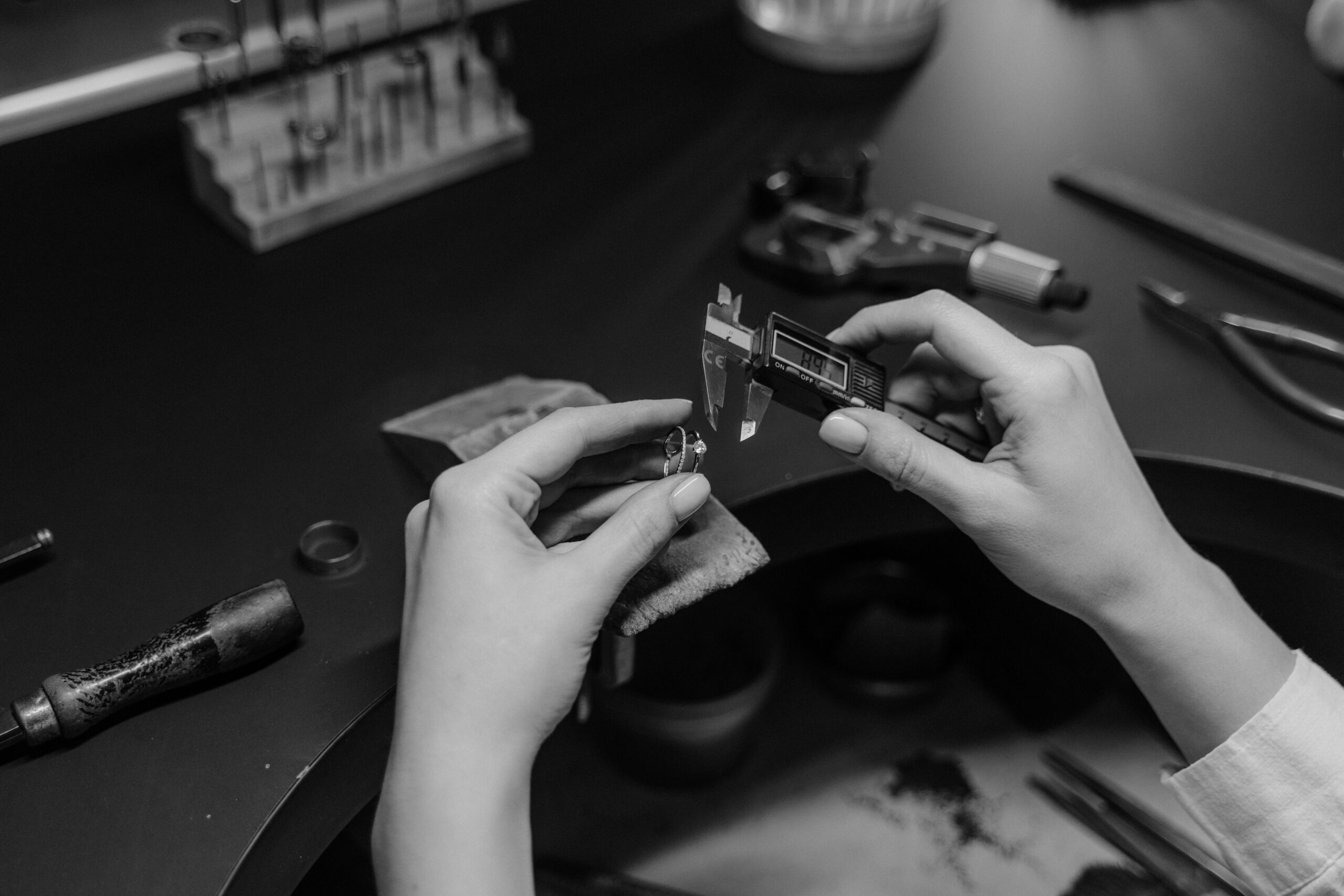
How To Check If A Ring Is Fully Round
A ring that is not fully round can produce misleading sizing results. After soldering or heavy forming, rings are often slightly oval.
Slide the ring gently down the mandrel and rotate it while observing the contact points. If the ring wobbles or the sizing changes depending on rotation, additional shaping may be needed.
- Rotate the ring while checking size.
- Look for uneven gaps or wobbling.
- Use gentle forming pressure to correct oval shapes.
- Recheck after filing or sanding.
Steel Mandrels vs Plastic Mandrels
Steel ring mandrels are the standard choice in most jewelry workshops because they are durable, accurate and suitable for shaping metal rings.
Plastic mandrels are lighter and useful for softer materials or temporary sizing, but they are generally less durable and less precise for heavy fabrication work.
| Mandrel Type | Best Use | Workshop Notes |
|---|---|---|
| Steel Mandrel | Professional jewelry fabrication | Strong, accurate and suitable for forming rings. |
| Plastic Mandrel | Light sizing and temporary checks | Less durable and not ideal for heavy shaping. |
| Grooved Mandrel | Stone-set or delicate rings | Protects settings during sizing and shaping. |
Common Ring Mandrel Mistakes
- Reading the ring while tilted: produces inaccurate sizing.
- Measuring an oval ring: distorted rings give misleading results.
- Ignoring wide band fit: wide rings usually feel tighter.
- Forcing the ring down the mandrel: can distort soft metal.
- Skipping final size checks: polishing and filing can slightly change fit.
When To Check Ring Size During Fabrication
Ring size should be checked several times during fabrication, not only at the end.
- After forming the blank
- After soldering
- After rounding the ring
- After major filing or sanding
- Before final polishing
Rechecking the ring throughout the process helps prevent unpleasant sizing surprises later.
Why Mandrels Are Essential For Handmade Rings
Ring mandrels combine measurement, shaping and sizing into a single workshop tool. They help jewelry makers maintain consistency while fabricating handmade rings from sheet or wire.
Whether making stacking rings, wide silver bands or custom fabricated pieces, the mandrel remains one of the most practical tools on the jewelry bench.