Why Even Bezel Walls Matter
Uneven bezel walls become much more noticeable once the stone is set. Areas that are too tall may wrinkle during burnishing while low areas can appear thin, weak or unfinished.
A smooth consistent wall height helps create:
- cleaner burnishing
- even pressure around the stone
- better visual symmetry
- reduced wrinkle risk
- more professional finishing
Most Uneven Walls Begin Earlier
Filing often reveals problems that started during bezel fabrication.
Common causes include:
- uneven bezel strip
- poor seam alignment
- soldering distortion
- warped backing plates
- uneven seat preparation
- stone tilt inside the bezel
Filing can improve the wall, but it cannot completely correct major structural problems underneath.
Choose The Right File
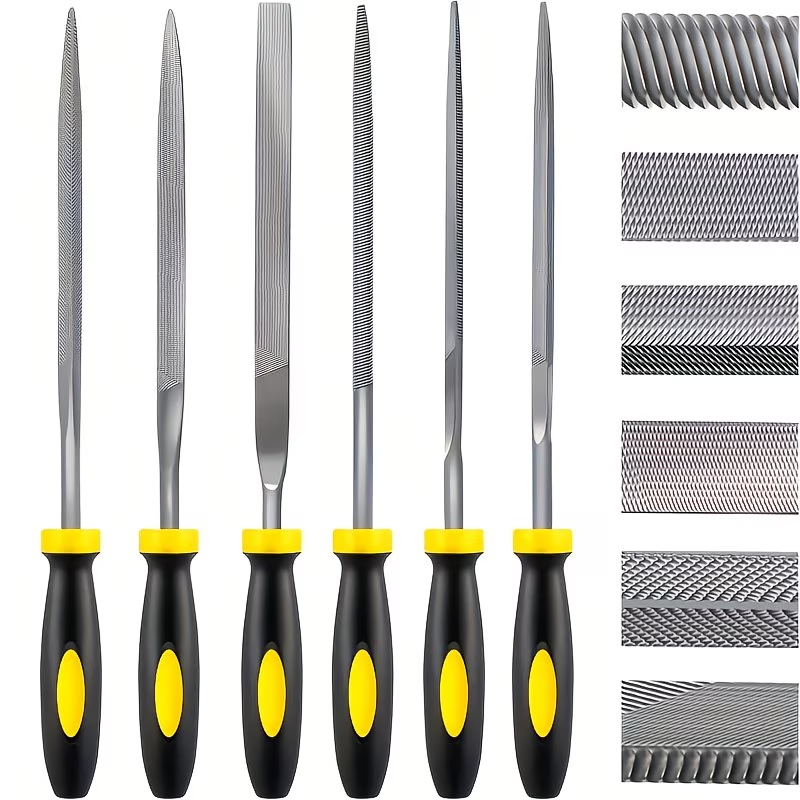
A clean sharp file gives much more control than an aggressive rough file.
Most bezel wall cleanup is done with fine-cut hand files rather than heavy material removal tools.
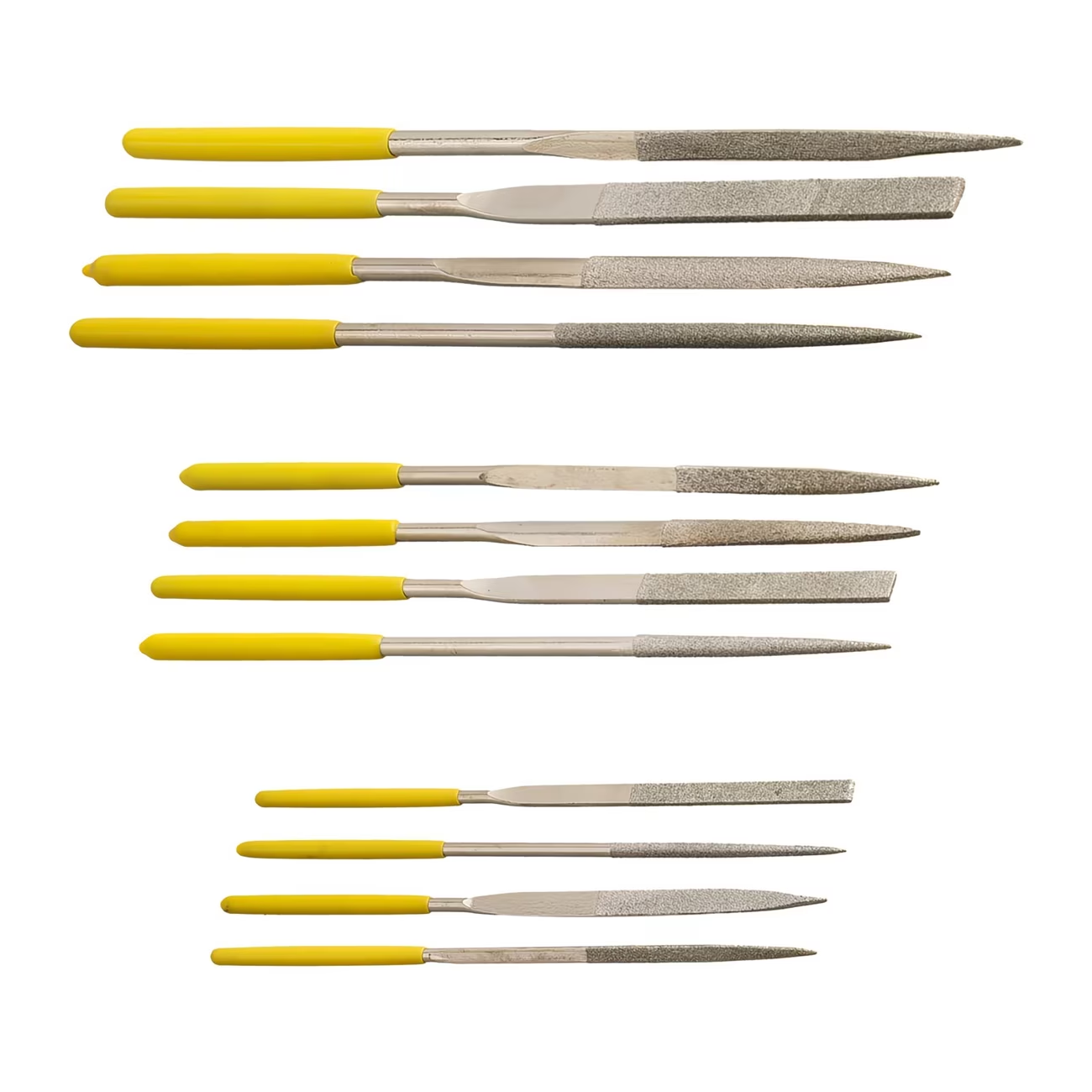
- use light pressure
- avoid coarse deep cuts
- keep the file clean
- check progress often
- support the piece securely
File Before Final Sanding
Filing should establish the shape and height consistency before sanding and polishing begin.
Trying to correct uneven bezel height with sanding alone usually removes too much material and softens important edges.
Work Slowly Around The Bezel
One of the biggest mistakes is aggressively filing only the highest area.
This often creates flat spots or sudden transitions around the bezel wall.
Instead:
- rotate the piece frequently
- use small controlled strokes
- check reflections under light
- compare wall height constantly
- remove material gradually
Watch Reflections Carefully
Directional lighting helps reveal uneven surfaces very quickly.
Reflections often show height inconsistencies before they are obvious to the naked eye.

Rotating the piece under a bench light can reveal:
- high spots
- waves
- flat sections
- distortion near the seam
- uneven wall thickness
Be Careful Near The Seam
The bezel seam is often slightly harder or shaped differently after soldering.
Filing too aggressively in this area can create visible dips or flat spots.
Always blend the seam gradually into the surrounding wall rather than trying to remove it completely.
Check The Stone Height Frequently
Filing changes the relationship between the bezel wall and the stone height.
If too much material is removed, the bezel may no longer cover enough of the stone for secure setting.
Test-fit the stone regularly while refining the bezel wall.
How Over-Filing Creates Problems
Filing too aggressively can weaken the bezel wall or create visual imbalance.
- walls become too thin
- low spots become visible after burnishing
- the bezel edge loses symmetry
- pressure becomes uneven during setting
- the bezel appears distorted around the stone
Quick Diagnosis Table
| Problem | Likely Cause |
|---|---|
| One side appears taller | Uneven filing or seat height |
| Flat spots on the bezel | Aggressive filing in one area |
| Visible waves under light | Inconsistent pressure or distortion |
| Stone looks tilted | Seat problem rather than wall problem |
| Wrinkles during burnishing | Wall height inconsistency or excessive height |
Related Bezel Guides
Final Thoughts
Filing a bezel wall evenly is mostly about patience, controlled pressure and constant inspection under good lighting.
The cleanest bezel walls usually come from gradual refinement rather than aggressive correction at the end of the fabrication process.