Why Bezels Wrinkle
Bezels usually wrinkle when too much metal is forced to move into too little space. This often happens when the bezel wall is too tall, too thin, unevenly filed or pushed too aggressively during setting.
A clean bezel should fold gradually over the stone edge. When the metal has nowhere to move evenly, it begins to buckle, fold or form small waves around the cabochon.
The Basic Cause
A bezel wall behaves like a thin strip of metal under compression. When you push it inward over the stone, the top edge shortens slightly. If the wall is too high or uneven, the metal may collapse instead of folding smoothly.
This is why bezel height, thickness and stone fit must work together. Even good burnishing technique cannot fully fix a badly prepared bezel.
Bezel Wire That Is Too Thin
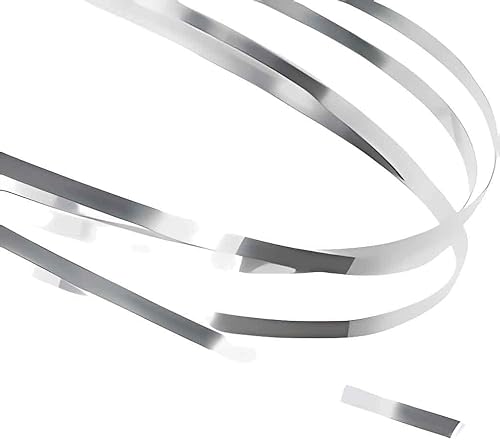
Thin bezel wire is easy to burnish, but it can wrinkle if the wall is too tall or unsupported. The thinner the metal is, the less resistance it has against folding.
Thin bezel wire works best when the stone is small, the wall height is controlled and the top edge is even. If the wall is too high, the metal may buckle before it grips the stone cleanly.
- Thin bezel wire moves easily.
- It is useful for small or delicate stones.
- It can wrinkle if the wall is too tall.
- It needs careful, even filing before setting.
Bezel Wall Too High
Excessive bezel height is one of the most common causes of wrinkling. If too much metal extends above the stone edge, the bezel has to fold farther during setting.
Instead of creating a clean grip, the extra metal can bunch up and form uneven waves. This is especially noticeable on round and oval cabochons where the wall must curve continuously.
Poor Stone Fit Inside The Bezel
A loose stone fit can also cause wrinkles. If the stone moves inside the bezel, pressure is not transferred evenly around the setting.
A bezel should fit closely enough that the stone feels supported before final burnishing. If there are large gaps, the metal may collapse into those spaces instead of folding evenly over the stone.
Uneven Bezel Wall Height
Uneven bezel height creates uneven resistance during burnishing. Low areas may close quickly, while high areas require more force and are more likely to wrinkle.
This often happens after rough trimming or uneven filing. The problem becomes more visible after polishing because the light catches every wave along the top edge.
- Check the bezel height before setting.
- Look at the wall from several angles.
- File high spots gradually.
- Avoid thinning one section more than the rest.
Filing Before Setting
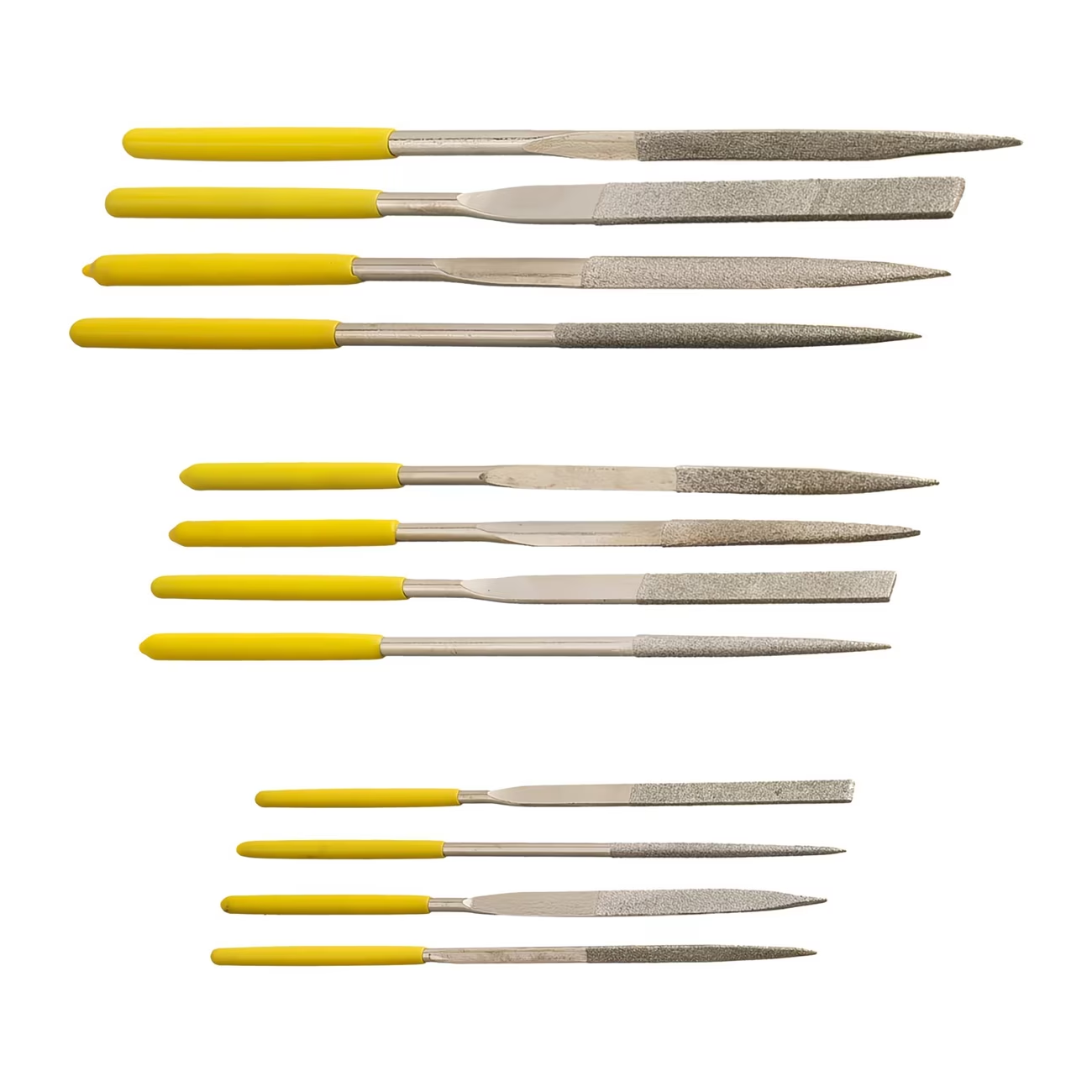
Filing is one of the best ways to prevent bezel wrinkles. A clean, even top edge gives the bezel wall a predictable path as it moves over the cabochon.
Heavy bezels may need a slight bevel at the top edge. Thin bezels need lighter filing because too much filing can weaken the wall.
Using Too Much Burnishing Pressure
Wrinkles can also happen when the bezel is pushed too hard in one area. Setting pressure should move around the stone gradually instead of forcing one section down completely.
It is usually better to work in stages: push lightly at opposite points, continue around the stone, then refine the edge with controlled burnishing.
Wrong Tool Angle
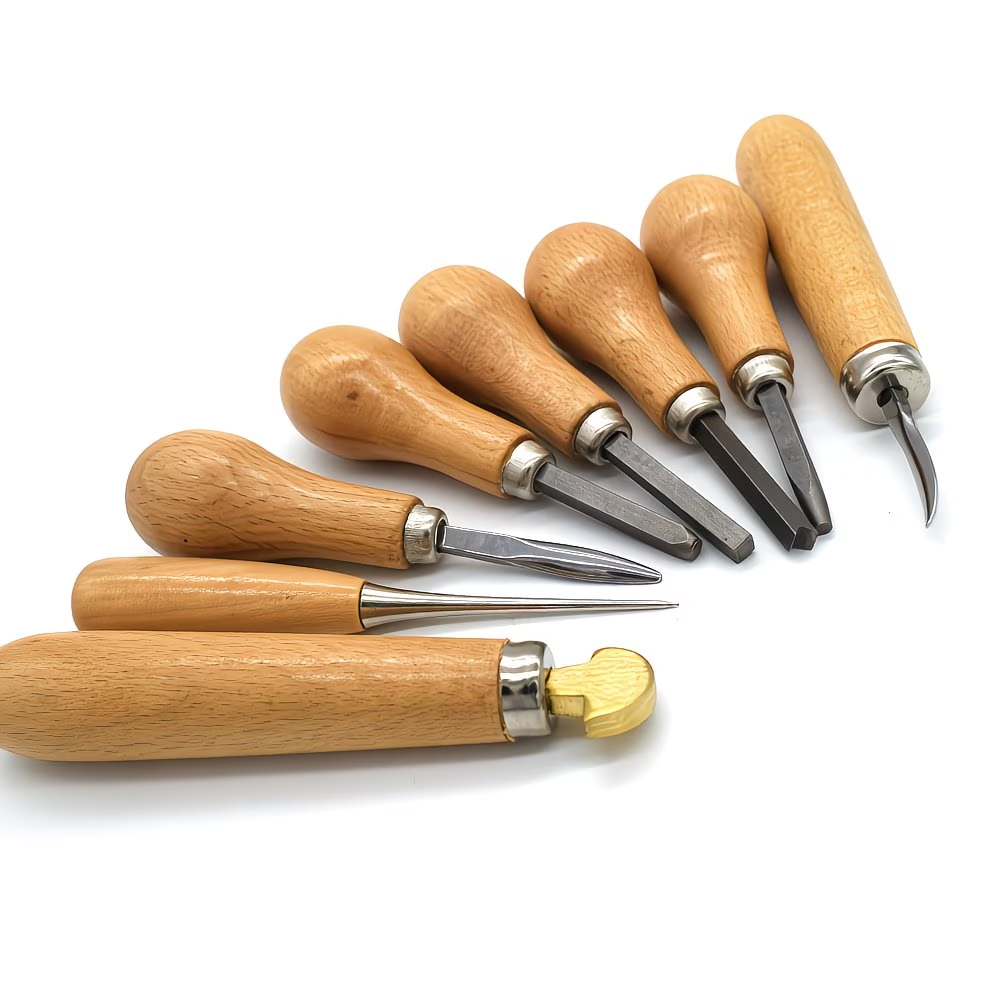
The angle of the burnisher or bezel pusher matters. If the tool pushes straight downward, the metal may compress and fold instead of rolling over the stone edge.
A controlled inward motion usually gives better results. The goal is to guide the metal over the cabochon, not crush the bezel wall.
How Bezel Thickness Affects Wrinkling
Both very thin and very thick bezels can create problems. Thin bezels may fold too easily, while thick bezels may resist movement and require too much pressure.
Medium thickness bezel wire is often more forgiving because it has enough strength to resist collapse while still being soft enough to burnish cleanly.
| Bezel Condition | What Happens | Typical Fix |
|---|---|---|
| Too thin | Wall folds or ripples easily | Lower the wall and use lighter pressure |
| Too tall | Extra metal bunches up | File height before setting |
| Too thick | Requires excessive force | Bevel or thin the top edge |
How To Prevent Bezel Wrinkles
The best way to prevent bezel wrinkles is to prepare the setting carefully before final burnishing. Most problems become much easier to control when the wall height, fit and edge condition are correct.
- Choose bezel wire thickness that matches the stone size.
- Keep the bezel height only as tall as needed.
- Make the wall height even before setting.
- Test-fit the stone repeatedly.
- Burnish gradually around the entire stone.
- Use lighter pressure on soft or delicate stones.
Can A Wrinkled Bezel Be Fixed?
Small wrinkles can sometimes be improved with careful burnishing, light filing and polishing. However, deep folds are difficult to remove without thinning or damaging the bezel wall.
If the wrinkle is severe, the cleanest repair may be to remove the stone and rebuild the bezel. This is why prevention is much better than correction.
Common Bezel Wrinkling Mistakes
- Leaving the wall too high: creates too much metal to fold over the stone.
- Using bezel wire that is too thin: makes the wall easier to collapse.
- Pushing too hard in one spot: causes local folding and uneven pressure.
- Ignoring poor stone fit: allows the metal to collapse into gaps.
- Skipping edge preparation: makes the bezel harder to move cleanly.
A Better Bezel Setting Workflow
A smooth bezel is usually the result of good preparation, not force. Measure the stone, choose appropriate bezel wire, fit the wall closely, file the height evenly and burnish gradually.
When the bezel is prepared correctly, setting becomes quieter and more controlled. The metal moves with less resistance and the final edge looks cleaner after polishing.