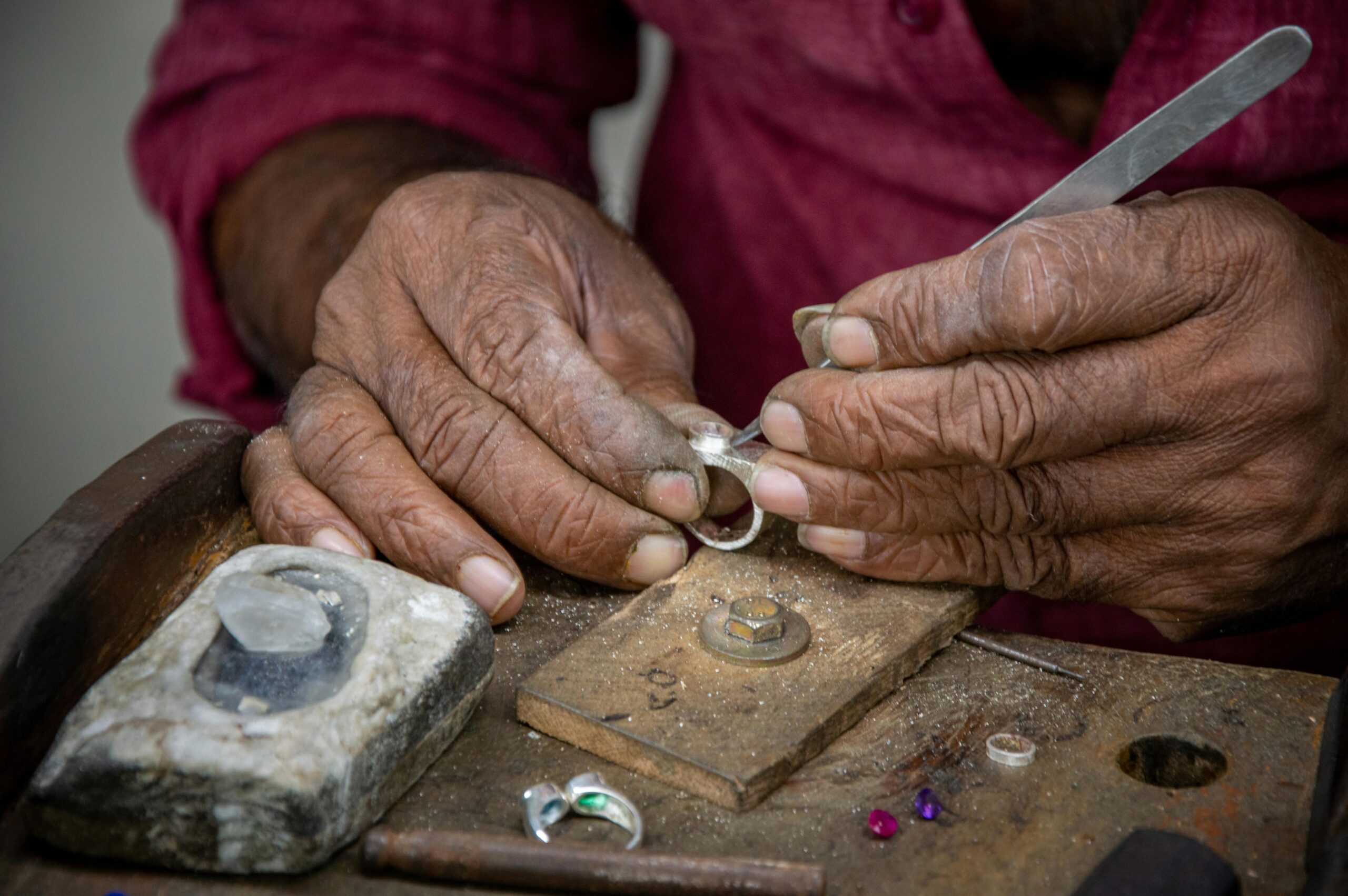
Why Even Filing Matters
Ring shanks reflect light continuously around the band, which means uneven filing becomes very noticeable after polishing.
Small flat spots, asymmetry or inconsistent curves often become much more visible once the silver reaches a reflective finish.
Choose The Correct File First
Different file shapes create very different surface behavior during fabrication.
Common ring filing tools include:
- flat files
- half-round files
- barrette files
- needle files
- safe-edge files
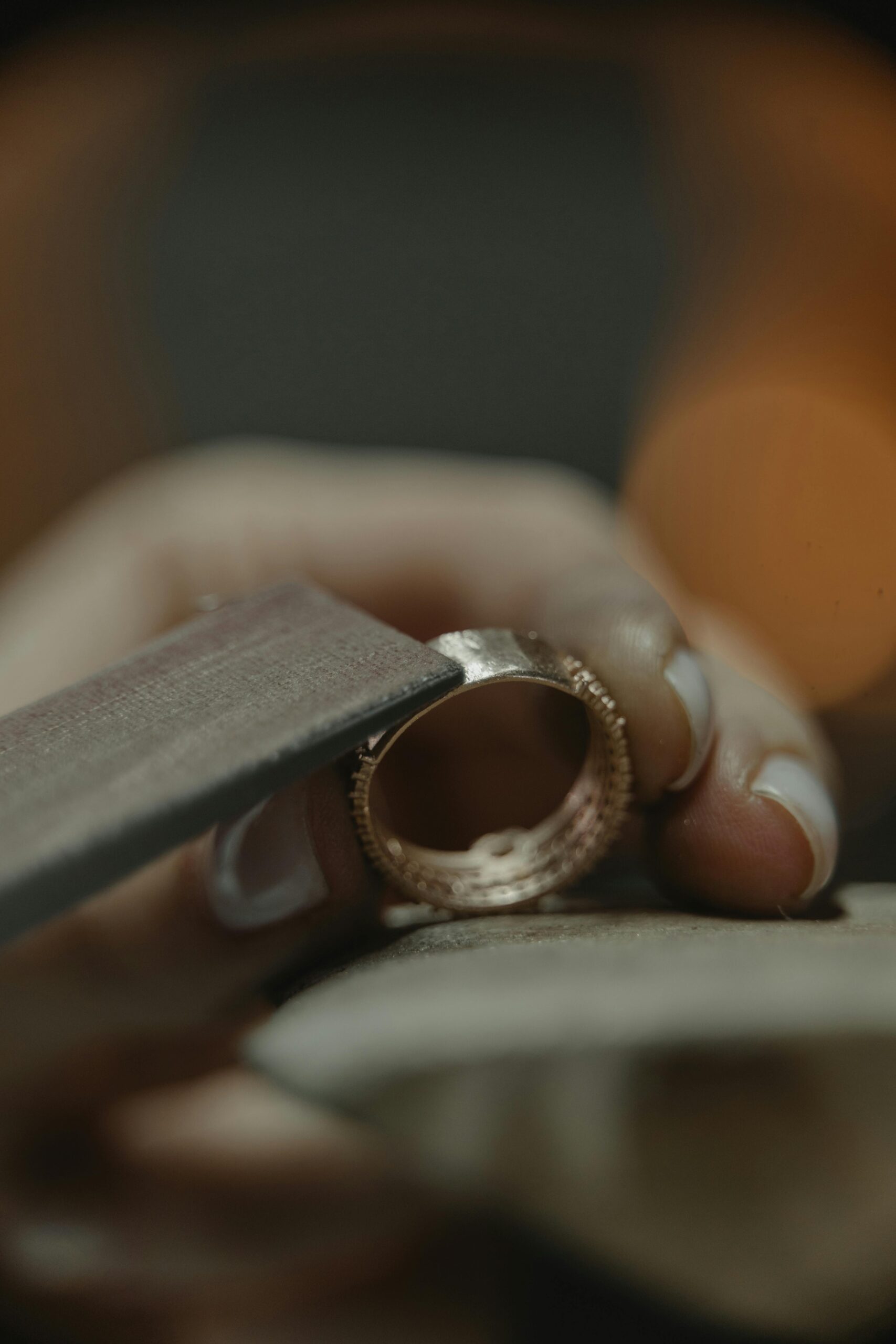
Directional Consistency Is Critical
Random filing angles create uneven surfaces and inconsistent reflections.
Professional filing usually follows controlled directional movement along the ring shank.
- keep strokes consistent
- avoid rocking the file
- maintain stable hand position
- watch edge symmetry constantly
- use controlled pressure
Heavy Pressure Creates Uneven Geometry
Excessive pressure often removes too much material from localized areas.
This can quickly create:
- flat spots
- wavy edges
- uneven ring thickness
- asymmetrical curves
- poor reflections after polishing
Inspect Reflections Frequently
Reflections reveal uneven filing faster than direct visual inspection.
Rotate the ring under directional lighting and inspect:
- surface consistency
- ring symmetry
- flat spots
- edge transitions
- reflection smoothness

Filing Marks Must Be Refined Gradually
Deep filing marks become difficult to remove later if the surface refinement process is rushed.
Most jewelers gradually refine the surface through:
- controlled filing
- abrasive sanding
- surface refinement
- pre-polish preparation
- final polishing
Ring Width Affects Filing Behavior
Wider ring bands make asymmetry easier to detect because reflections stretch across a larger surface area.
Narrow bands may hide small imperfections more easily, while wide rings require greater surface control.
Quick Diagnosis Table
| Problem | Likely Cause |
|---|---|
| Flat spots on ring shank | Uneven filing pressure |
| Wavy reflections after polishing | Inconsistent filing direction |
| Uneven ring thickness | Localized aggressive filing |
| Deep scratches remain visible | Incomplete abrasive refinement |
| Asymmetrical ring shape | Poor visual inspection during filing |
How Professionals File Ring Shanks
Professional filing usually emphasizes geometry control rather than speed.
- light controlled pressure
- consistent directional strokes
- constant reflection checks
- minimal unnecessary material removal
- careful edge refinement

Related Ring Fabrication Guides
Final Thoughts
Clean ring filing depends on consistency, controlled pressure and understanding how reflections reveal geometry problems.
Smooth curves and balanced reflections usually create the most professional-looking ring shanks after polishing.