
Why Bezel Finishing Matters
Bezel settings reflect light strongly, especially after polishing. Small scratches, uneven surfaces and rough transitions become highly visible once the metal reaches a reflective finish.
Clean finishing improves:
- surface reflections
- bezel symmetry
- stone appearance
- professional finish quality
- overall visual balance
Start With Clean Filing
Sanding and polishing work best when the bezel geometry is already refined correctly.
Filing should establish:
- smooth wall height
- clean transitions
- even curves
- controlled symmetry
- stable edge geometry
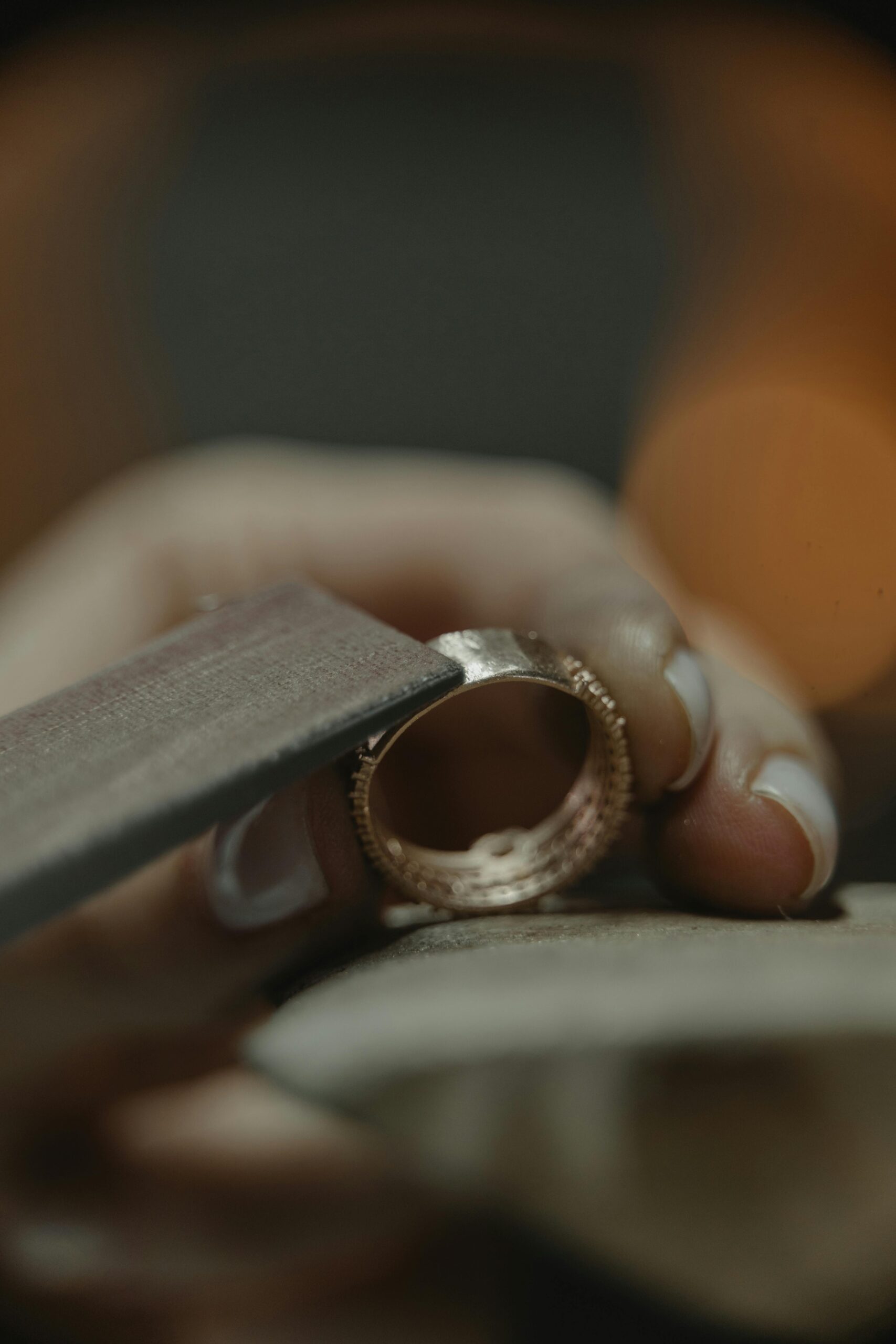
Heavy sanding should not be used to correct major filing problems.
Use Controlled Abrasive Progression
Professional finishing usually moves through several abrasive stages gradually rather than jumping directly to polishing compounds.
| Stage | Purpose |
|---|---|
| Coarse Sanding | Remove filing marks |
| Medium Sanding | Refine surface consistency |
| Fine Sanding | Prepare for polishing |
| Pre-Polish | Reduce micro scratches |
| Final Polish | Create reflective finish |
Directional Scratches Matter
Random scratch patterns become more visible after polishing.
Many jewelers sand in controlled directions to monitor surface refinement between abrasive stages.
- keep sanding consistent
- remove previous scratch direction fully
- inspect reflections often
- avoid skipping abrasive stages
Protect The Stone During Finishing
Aggressive sanding and polishing near soft stones can easily damage the surface.
Extra care is important with:
- opal
- turquoise
- amber
- malachite

Loose polishing compounds and aggressive wheels can scratch delicate materials quickly.
Polishing Compounds And Surface Control
Polishing compounds refine the metal surface by smoothing microscopic scratches.
Different compounds behave differently depending on:
- metal hardness
- surface preparation
- tool speed
- pressure
- cloth or wheel type
Excessive pressure during polishing can soften details and distort crisp bezel edges.
Inspect Reflections Constantly
Reflections reveal surface defects faster than direct visual inspection.
Rotate the piece under directional bench lighting and look for:
- remaining scratches
- flat spots
- uneven polishing
- waves near the bezel edge
- distorted reflections

Over-Polishing Creates Problems
Excessive polishing can soften important geometry and reduce edge definition.
Common over-polishing problems include:
- rounded bezel edges
- softened detail lines
- loss of symmetry
- surface smearing
- reduced crispness around the stone
Quick Diagnosis Table
| Problem | Likely Cause |
|---|---|
| Visible scratches after polishing | Skipped abrasive stages |
| Cloudy reflections | Incomplete surface refinement |
| Rounded bezel edges | Over-polishing |
| Stone scratched during finishing | Aggressive polishing near stone |
| Wavy reflections | Uneven filing or sanding |
How Professionals Finish Bezels
Professional finishing usually emphasizes control rather than speed.
- gradual abrasive progression
- consistent scratch direction
- controlled polishing pressure
- frequent inspection under light
- careful edge preservation
Related Finishing Guides
Final Thoughts
Clean bezel finishing depends on careful surface refinement throughout the entire fabrication process. Sanding and polishing work best when the geometry underneath is already controlled and balanced.
Crisp reflections, smooth surfaces and controlled edges usually create the most professional bezel settings.