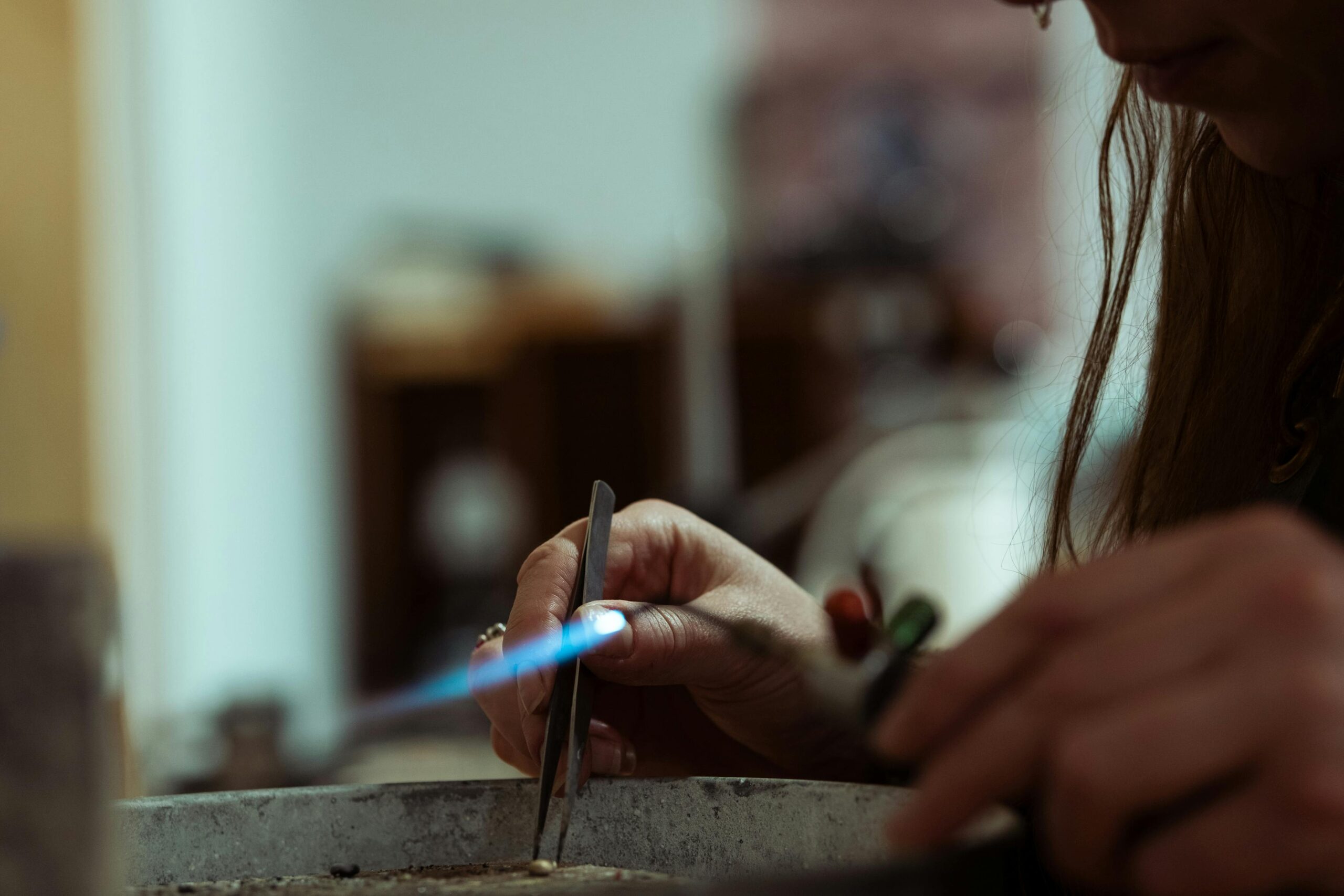
Why Solder Seams Become Visible
Solder seams usually become visible because the joint reflects light differently than the surrounding silver surface.
Small inconsistencies in filing, solder flow or surface geometry often become highly noticeable after polishing.
Poor Joint Fit Creates Visible Seams
Large gaps between silver components require excessive solder and often create obvious seam lines after cleanup.
Professional solder joints usually rely on:
- tight metal fit
- stable seam alignment
- minimal solder volume
- clean edge preparation

Too Much Solder Creates Cleanup Problems
Excess solder often spreads beyond the seam and creates uneven surface transitions.
Heavy cleanup afterward may:
- flatten surrounding surfaces
- distort reflections
- thin nearby metal
- leave visible seam shadows
Overheating Changes Surface Appearance
Excessive heat exposure can alter the surface texture near the seam.
Overheated areas may polish differently than the surrounding silver and create visible contrast after finishing.
- fire scale
- grain growth
- surface dullness
- uneven reflections

Filing Direction Matters
Filing marks near seams often become highly visible after polishing.
Uneven filing may create:
- reflection distortion
- flat spots
- surface dips
- visible seam outlines
Polishing Reveals Geometry Differences
Polishing does not hide seam inconsistencies. It usually makes them easier to detect.
Directional bench lighting often reveals:
- tiny seam ridges
- surface waves
- uneven curvature
- reflection interruption

Some Seam Locations Are More Difficult
Highly reflective curved areas make seam visibility much harder to hide.
Difficult seam areas include:
- wide ring shanks
- high polish bezels
- domed surfaces
- mirror-finished cuffs
Quick Diagnosis Table
| Problem | Likely Cause |
|---|---|
| Dark seam line after polish | Poor surface transition |
| Raised seam ridge | Excess solder buildup |
| Visible seam shadow | Uneven filing geometry |
| Surface color difference | Overheating near seam |
| Reflection interruption | Distorted surrounding surface |
How Professionals Hide Solder Seams
Professional jewelers usually focus on seam preparation long before polishing begins.
- tight seam fit
- minimal solder usage
- controlled heating
- careful filing
- reflection-based inspection
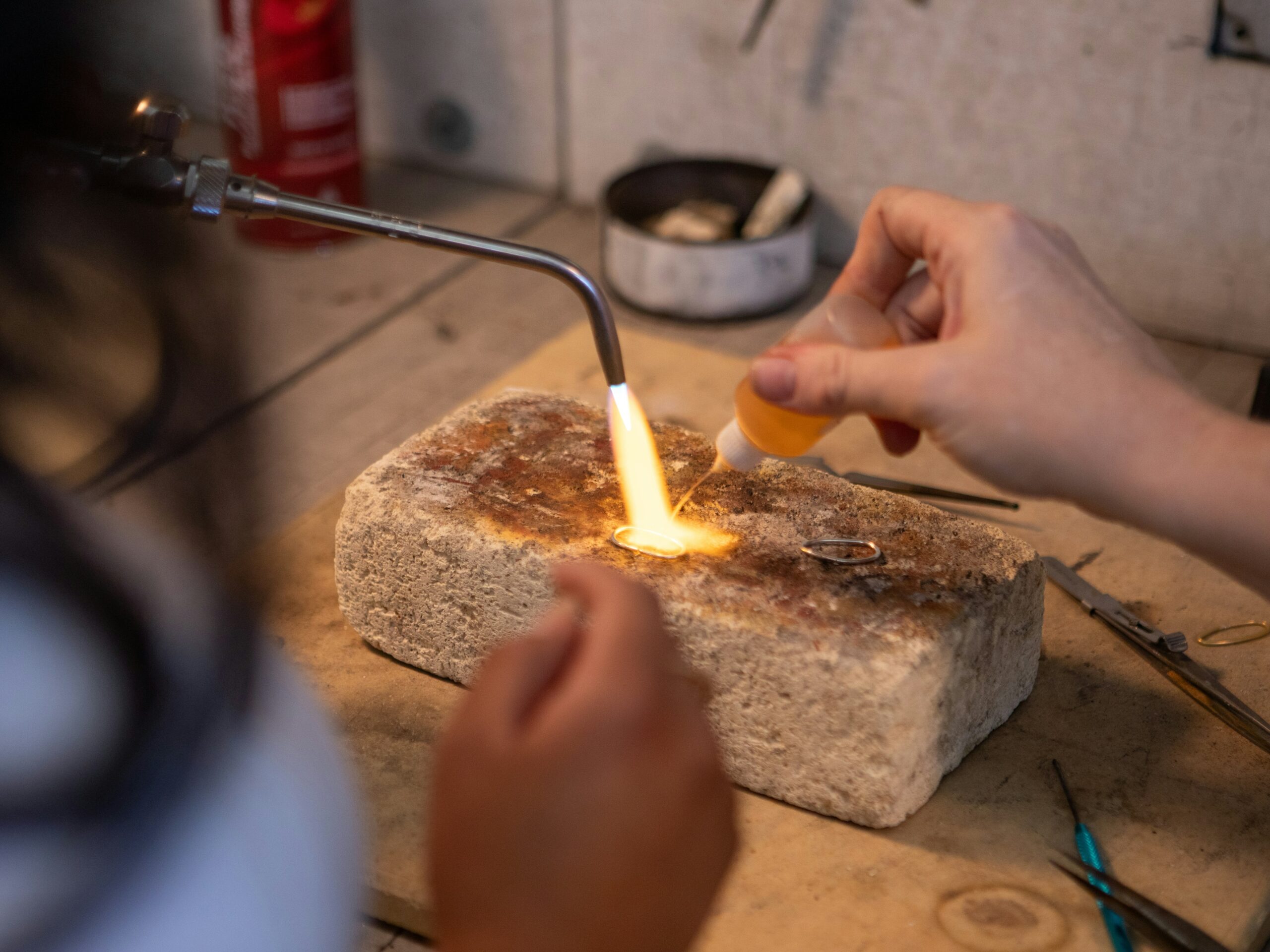
Related Soldering Guides
Final Thoughts
Visible solder seams usually result from geometry inconsistencies rather than solder strength itself.
Clean seam preparation, controlled heat and careful surface refinement usually create the most invisible solder joints in silver jewelry fabrication.