Why Scratches Become So Visible
Silver reflects light strongly, especially after polishing. Even small scratches can interrupt reflections and become highly visible under directional lighting.
Deep scratches usually appear darker because they break the surface consistency of the metal.
Understand Scratch Depth First
Before sanding or polishing begins, inspect how deep the scratches actually are.
Fine surface haze often needs only light polishing, while deeper scratches usually require abrasive correction.
| Scratch Type | Typical Solution |
|---|---|
| Light surface haze | Polishing compound |
| Moderate scratches | Fine sanding + polishing |
| Deep scratches | Progressive abrasive correction |
| Heavy gouges | Filing and reshaping |
Start With The Least Aggressive Method
Removing excessive metal too quickly can distort jewelry geometry and soften important edges.
Always begin with the mildest abrasive likely to solve the problem.
- inspect under strong light
- remove minimal material
- preserve edge definition
- check reflections frequently
- avoid aggressive polishing pressure
Use Controlled Abrasive Progression
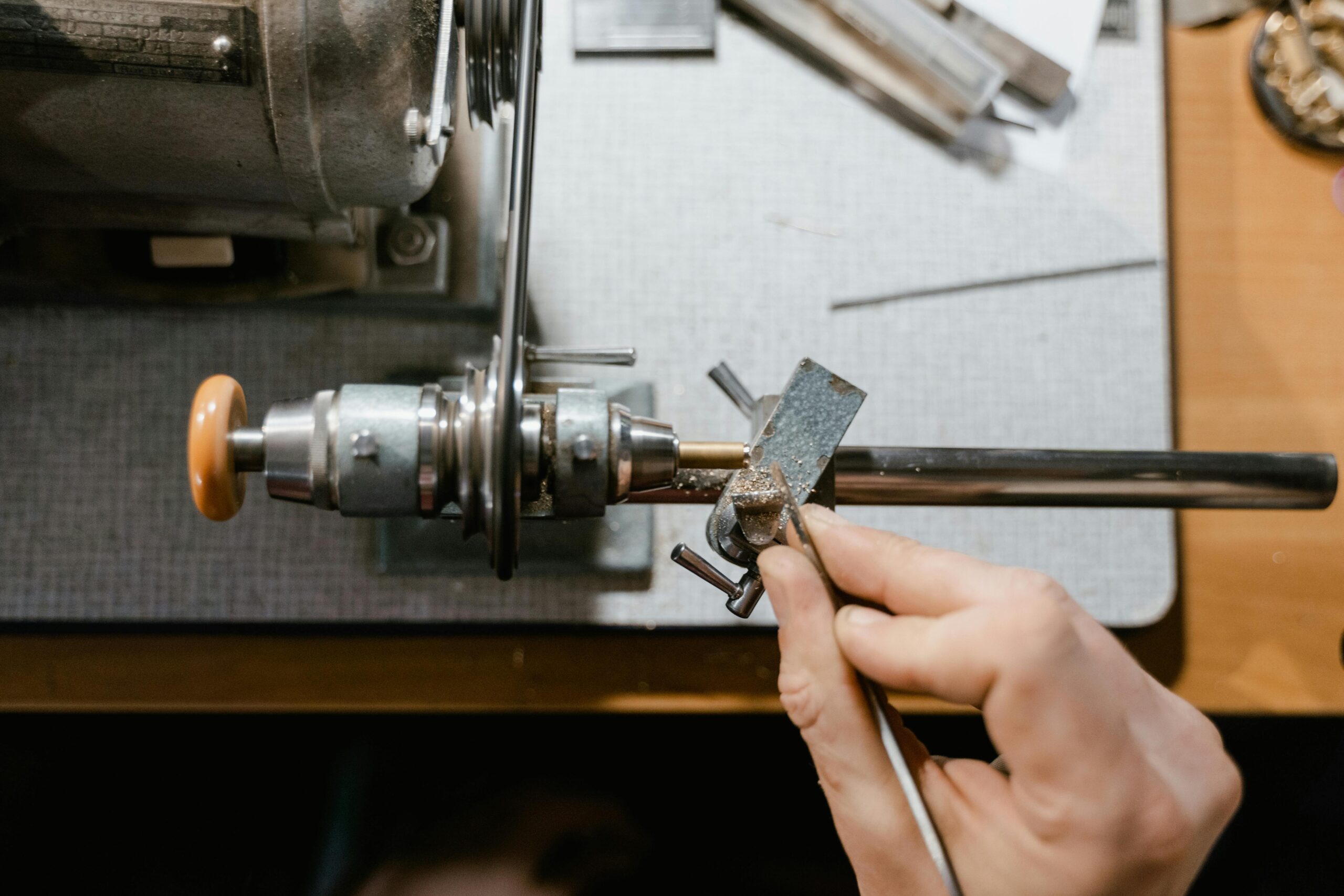
Professional finishing usually removes scratches gradually through multiple abrasive stages.
Skipping stages often leaves hidden scratches that reappear after polishing.
- remove previous scratches fully
- change sanding direction between stages
- clean the surface regularly
- avoid contamination between abrasives
Directional Lighting Reveals Everything
Reflections under bench lighting reveal surface defects much faster than normal viewing angles.
Rotate the piece frequently while inspecting:
- remaining scratches
- flat spots
- surface waves
- distorted reflections
- uneven polishing
Polishing Compounds Refine The Surface
Polishing compounds smooth microscopic surface imperfections and improve reflectivity.
Different polishing systems behave differently depending on:
- metal hardness
- surface preparation
- wheel type
- pressure
- tool speed
Over-Polishing Can Create Problems
Excessive polishing can soften crisp geometry and remove intentional detail.
Common over-polishing problems include:
- rounded edges
- softened details
- loss of symmetry
- surface smearing
- reduced contrast in reflections
Scratches Around Stones Need Extra Care
Removing scratches near bezel settings or soft stones requires much more control than polishing flat silver surfaces.
Aggressive polishing near stones can:
- scratch soft stones
- soften bezel edges
- catch stone corners
- distort reflections around settings
Quick Diagnosis Table
| Problem | Likely Cause |
|---|---|
| Scratches remain after polishing | Skipped abrasive stages |
| Cloudy surface reflections | Incomplete refinement |
| Rounded edges | Excessive polishing |
| Visible waves in silver | Uneven sanding pressure |
| Stone damaged during polishing | Aggressive finishing near setting |
How Professionals Remove Scratches
Professional jewelers usually focus on gradual refinement instead of trying to force a mirror finish immediately.
- controlled abrasive progression
- frequent inspection under light
- minimal material removal
- preservation of geometry
- careful polishing pressure

Related Jewelry Finishing Guides
Final Thoughts
Removing scratches from silver jewelry is mostly about controlled surface refinement rather than aggressive polishing.
Clean reflections, preserved geometry and careful abrasive progression usually create the most professional jewelry finishes.