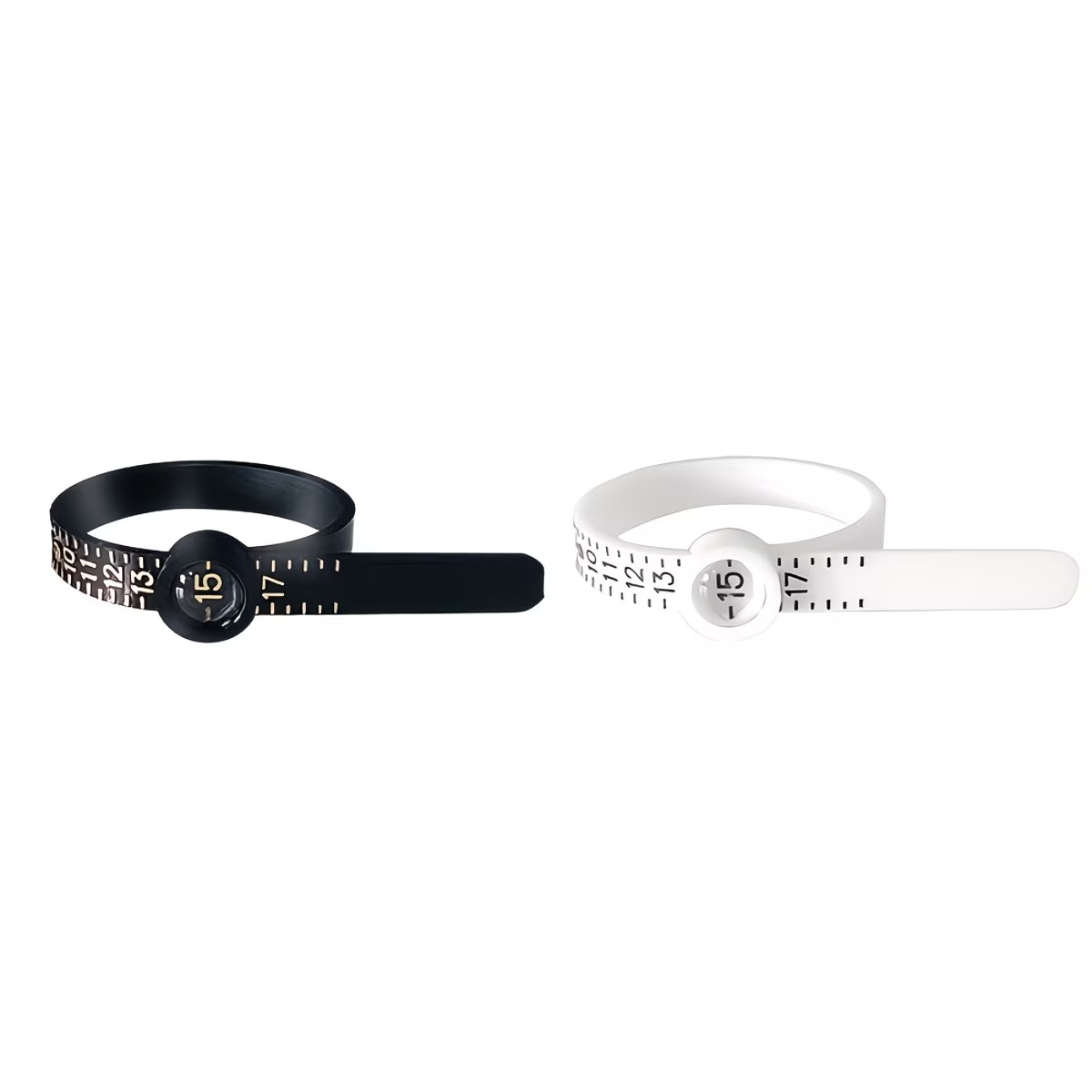
RING SIZING GUIDE

How To Measure Finger Size At Home

Learn how to measure finger size at home using simple tools, printable ring sizers, existing rings, digital calipers and practical jewelry workshop methods.

Measuring tape used as a home ring sizing reference
Home Sizing Reality

Why Finger Size Is Easy To Measure Wrong

Measuring finger size at home can be useful, but it is also easy to get an inaccurate result. Fingers change size during the day, wide rings feel different from narrow rings and paper measuring methods can stretch, slip or pull too tight.

The goal is not only to find a number. The goal is to find a size that will feel comfortable on the actual finger, with the actual ring width and design you plan to make or order.

Finger changes Temperature, swelling and activity can change the measurement.
Ring width Wide rings usually feel tighter than narrow rings in the same size.
Home methods Useful for estimates, but important rings should still be confirmed.
Best home method Use a finger size gauge or measure an existing well-fitting ring with calipers.
Method Comparison

Best Ways To Measure Finger Size At Home

There are several ways to measure finger size at home. Some are better for quick estimates, while others are more useful for jewelry making and workshop planning.
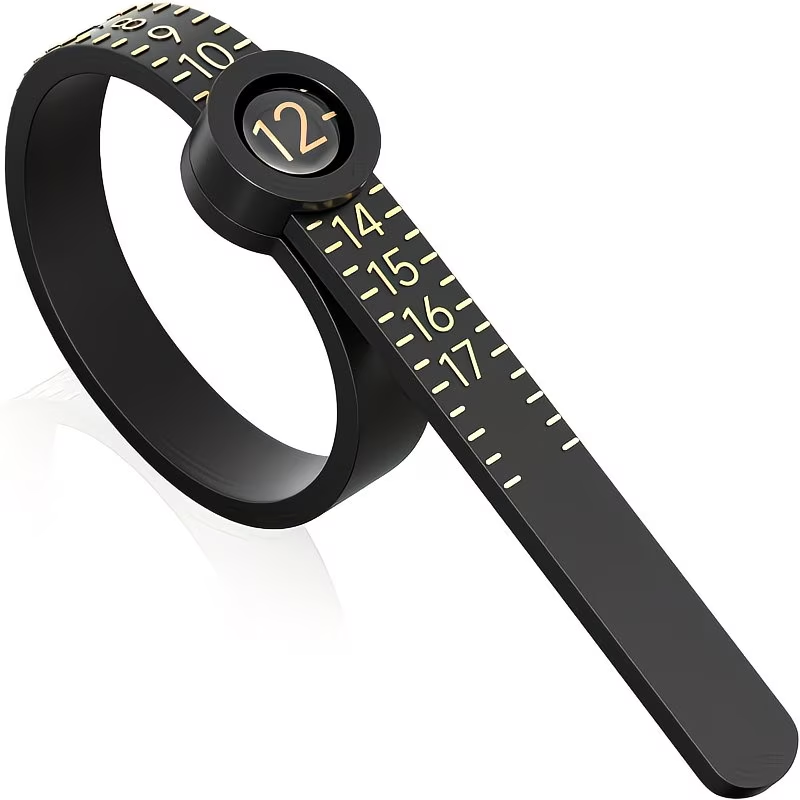
Ring size gauge Best home option for checking the actual finger directly.
Existing ring Good if the ring already fits the same finger and is measured carefully.
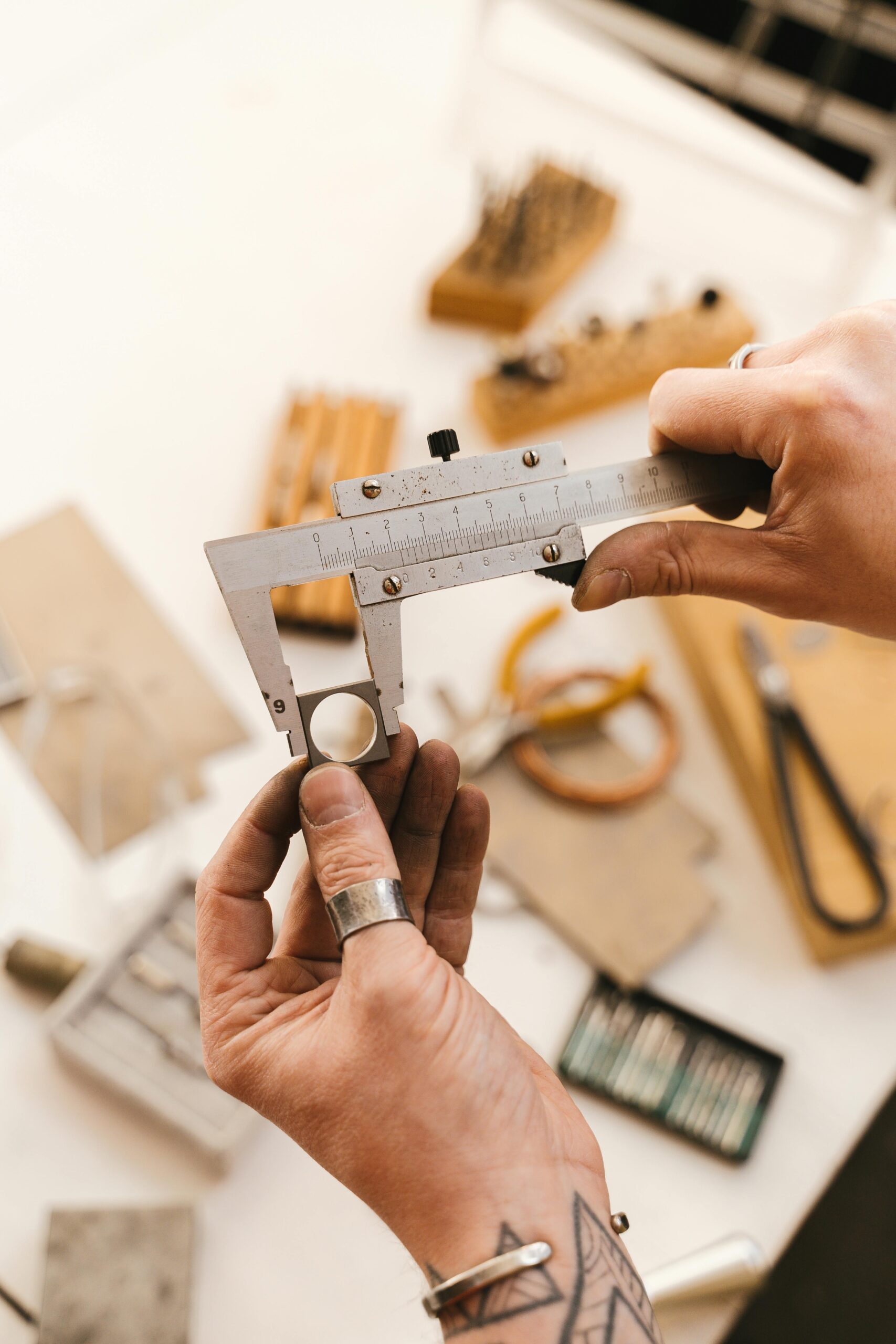
Digital calipers Very useful for makers because they give inside diameter in millimeters.
Printable ring sizer Useful only when printed at true 100% scale.
Paper strip or string Works only as a rough estimate and is the least reliable method.
Finger size gauge used to test ring size directly on the finger
A finger size gauge is usually more reliable than paper or string because it tests how a ring size feels on the actual finger.
Jewelry measuring tools used at the bench for careful sizing work
Millimeter measurements are useful when a home size estimate needs to connect to ring making or blank length planning.
Method 1

Use A Finger Size Gauge

A finger size gauge is usually the most reliable home method. It lets you test ring sizes directly on the finger instead of estimating from a paper strip or printed scale.

Slide the gauge over the knuckle and check how it feels at the base of the finger. The correct size should pass over the knuckle with some resistance but not feel painfully tight.

Correct finger Measure the exact finger the ring will be worn on.
Normal temperature Measure when hands are not unusually cold, hot or swollen.
Nearby sizes Try half sizes or nearby sizes to compare comfort.
Wide rings Remember that wide bands may need more room than narrow rings.
Existing Ring Method

Measure An Existing Ring With Calipers

If you already have a ring that fits well, measure the inside diameter with digital calipers. This is one of the best methods for jewelry makers because it gives a real measurement in millimeters.

Use a fitting ring The ring should fit the same finger you are measuring for.
Measure inside only Do not include the metal thickness or outside diameter.
Measure straight across Hold the calipers across the widest inside point.
Check more than once If the ring is slightly oval, measurements may vary by direction.
Printable Method

Use A Printable Ring Sizer Carefully

A printable ring sizer can work well if the file is printed at true 100% scale. The most common mistake is letting the printer shrink or enlarge the page.

Before using any printed ring sizer, check the printed scale with a ruler or calipers. If the scale check is wrong, the ring size result will also be wrong.
Print at 100% Use actual size, not automatic scaling.
Turn off fit to page Fit-to-page settings can shrink or enlarge the sizing guide.
Check the scale Measure the printed reference before using the sizer.
Confirm important sizes Use a gauge, calipers or jeweler for important custom work.
Printable jewelry template used for checking ring sizing and print scale
Printable sizing tools only work if the printed scale is verified before measuring.
Rough Estimate

Use A Paper Strip Or String Only As A Starting Point

A paper strip or string can give a rough finger size estimate, but it is the least reliable method. Paper can bend, string can stretch and both can be pulled too tightly.

Wrap gently Do not compress the finger or pull the strip tight.
Mark the overlap Mark where the strip meets itself around the finger.
Measure in millimeters Use the length as an estimate of inside circumference.
Confirm the result Check with a gauge or existing ring before cutting metal.
Do not pull paper or string too tight. If it compresses the finger, the finished ring may be too small.
Timing And Comfort

When Should You Measure Finger Size?

Finger size changes during the day. Cold fingers are often smaller, while warm fingers may be slightly larger. Hands can also swell after exercise, heat, salty food or heavy hand activity.

Normal temperature Measure when hands feel normal, not very cold or swollen.
More than once Repeat the measurement if the ring fit matters.
Knuckle fit The ring must pass over the knuckle comfortably.
Wide bands Test wider rings more carefully because they feel tighter.
Wide Ring Warning

Wide Rings Need Extra Attention

Wide rings usually feel tighter than narrow rings, even when they are technically the same size. This is one of the most common reasons a home measurement feels wrong later.
6 mm and wider Usually needs more careful comfort testing than narrow stacking rings.
Flat interior Can feel tighter than a rounded comfort-fit interior.
Knuckle shape The size must pass over the knuckle and still feel secure at the base.
Practice band Useful before cutting expensive metal for a custom wide ring.
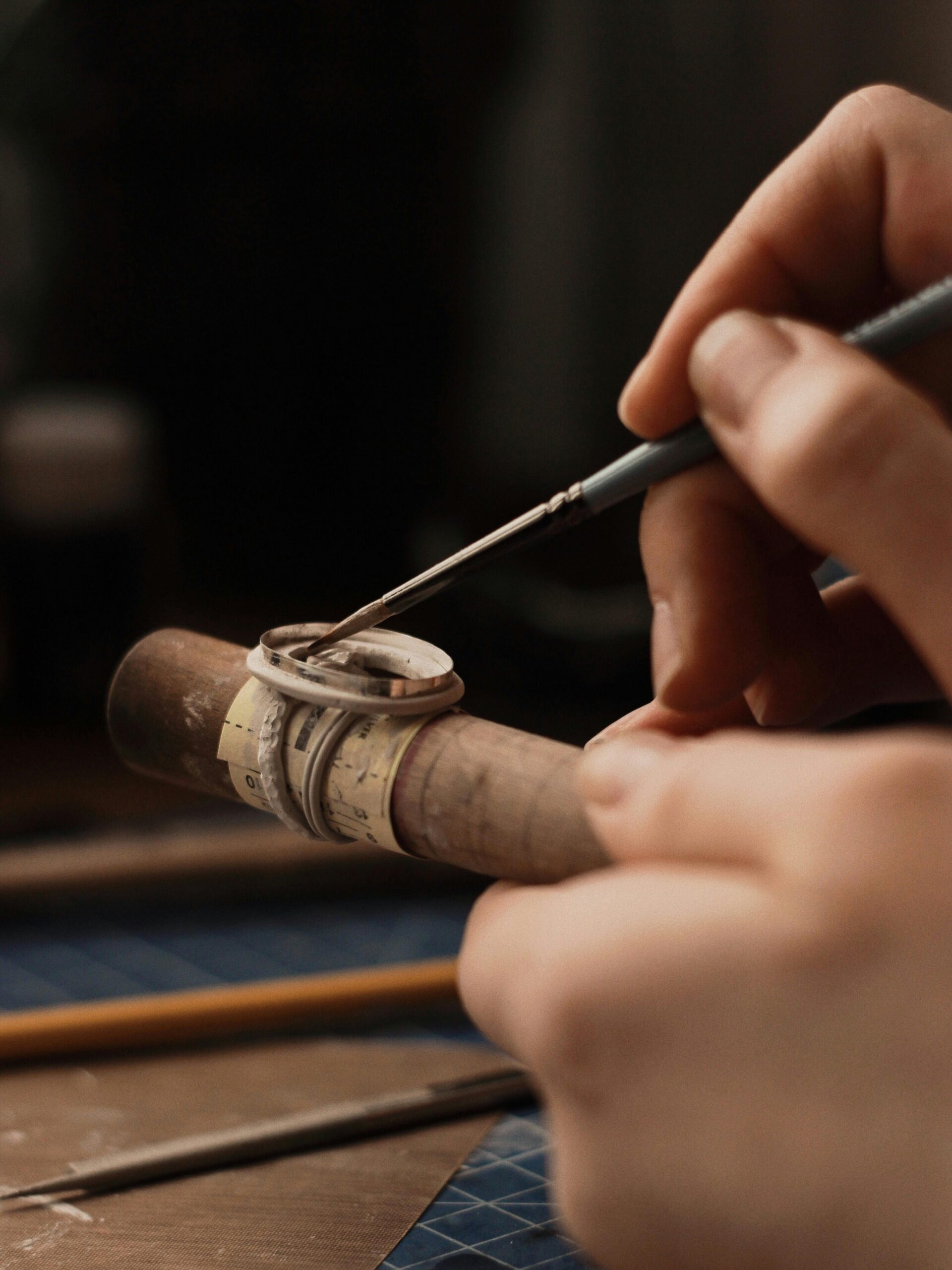
Jewelry maker checking a ring component during handmade ring fabrication
Finger size is only the first step when the ring will be fabricated from metal.
Maker Workflow

How Finger Size Connects To Ring Blank Length

If you are making a ring, finger size is only the first measurement. You also need ring width, metal thickness and the correct ring blank length.

The inside diameter determines the target ring size, while metal thickness affects how long the blank should be before forming and soldering.

1. Measure finger size Use a gauge, existing ring, calipers or printable reference.
2. Choose ring width Wide rings need more comfort planning.
3. Measure metal thickness Use actual millimeters, not only gauge labels.
4. Calculate blank length Use the calculator before cutting metal.
Mistake Checklist

Common Home Ring Sizing Mistakes

Most home sizing errors happen because the measurement is taken at the wrong time, with the wrong tool or without considering the final ring design.

Cold fingers The ring may end up too small for normal wear.
Paper pulled too tight Compressed measurements usually lead to tight rings.
Forgetting the knuckle The ring must pass over the knuckle, not only fit the base.
Wrong print scale Printer scaling can ruin printable ring sizer accuracy.
Ignoring ring width Wide rings feel tighter than narrow rings.
Outside measurement Existing rings should be measured by inside diameter only.
Calculator

Confirm The Size Before Cutting Metal

Home ring sizing can give a useful starting point, but important custom rings should be confirmed with a real gauge, caliper measurement, mandrel check or professional fitting.

Confirm The Size Before Cutting Metal

Home ring sizing can give a useful starting point, but important custom rings should be confirmed with a real gauge, caliper measurement, mandrel check or professional fitting.