STONE SETTING GUIDE

How To Burnish A Bezel Cleanly

Learn how to burnish a bezel cleanly with controlled pressure, smooth tool movement, stable stone support and careful inspection so the bezel closes without scratches, wrinkles or uneven compression.

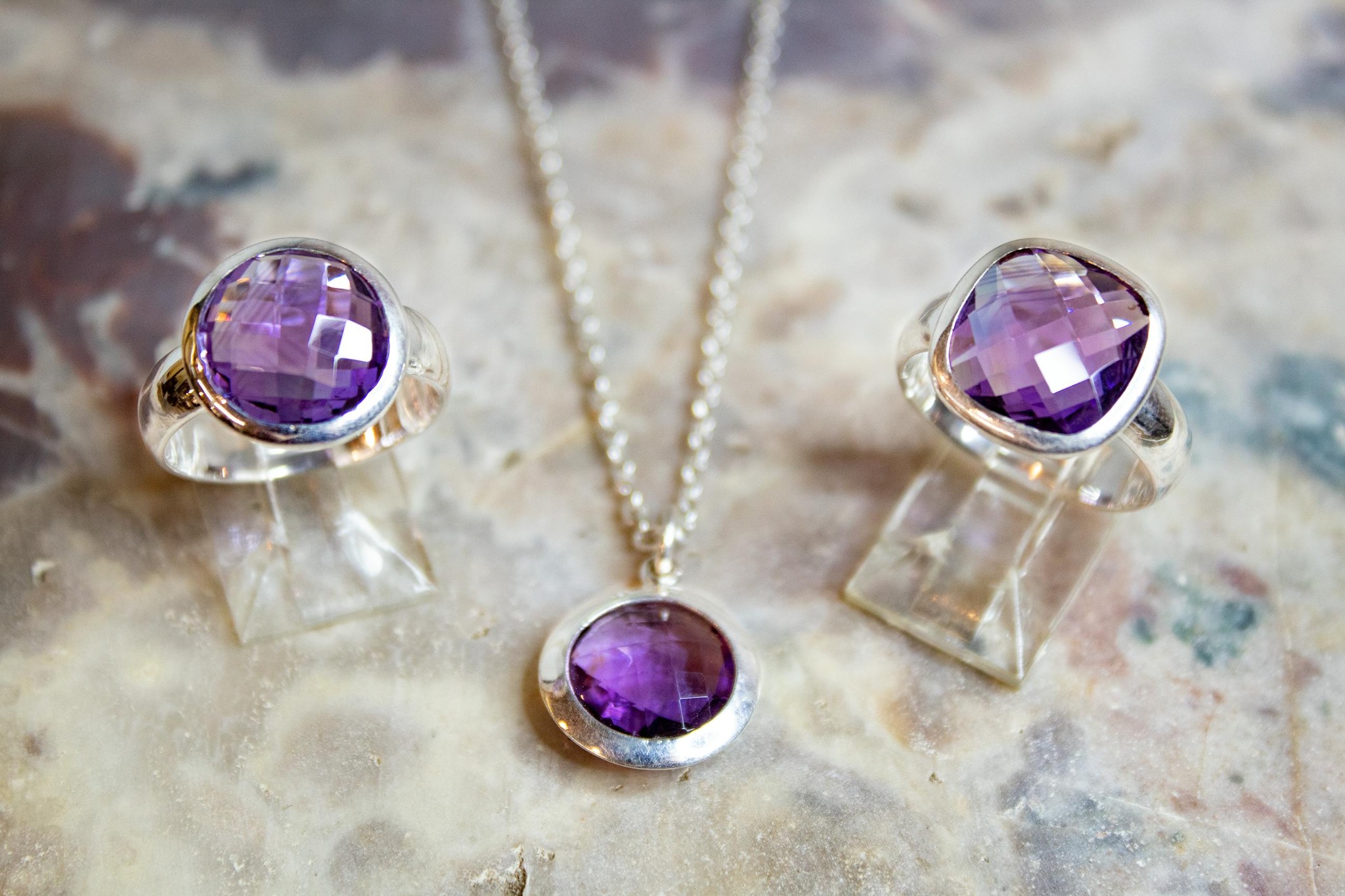
Polished amethyst stones in clean bezel settings showing finished burnished edges
Burnishing Basics

What Clean Burnishing Really Means

Clean bezel burnishing is controlled compression. The goal is to move the bezel wall smoothly over the stone without gouging the metal, folding the edge or forcing one side down before the rest of the setting is ready.

A cleanly burnished bezel should look calm and intentional. The stone should sit securely, the top edge should look even, and the metal should appear compressed rather than crushed.
Controlled pressure Move the bezel gradually instead of forcing one area down at once.
Stable stone support The cabochon should not rock, rise or shift during compression.
Smooth tool surface A polished burnisher reduces scratches and drag marks on soft silver.
Even final edge The finished bezel should frame the stone without wrinkles or collapsed spots.
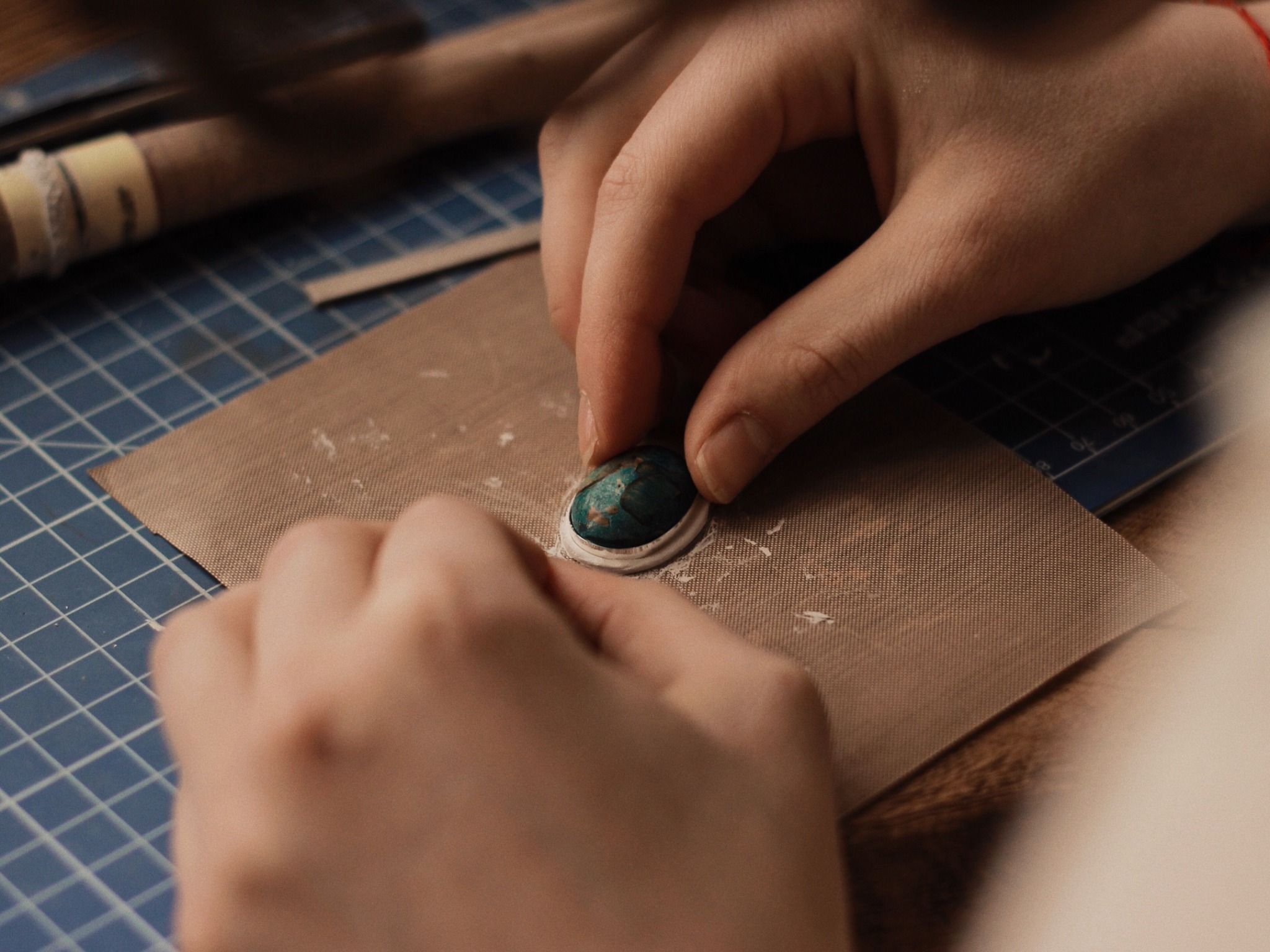
Cabochon stone being checked inside a bezel seat before final burnishing
A level stone and supported seat make the bezel easier to close cleanly.
Before Setting

Start With A Stable Bezel Seat

Most burnishing problems begin before the burnisher touches the bezel. If the stone rocks in the seat, the pressure from the tool can shift it, tilt it or make the bezel close unevenly.

The stone should sit level and stable before serious pressure begins. The bezel wall should be close enough to move toward the stone, but not so tall that excess metal has nowhere to go.

Stone position The cabochon should sit level before serious pressure is applied.
Seat support The back and lower edge need enough support to prevent rocking.
Wall height Enough metal is needed to grip, but excessive height invites wrinkles.
Clean surface Dust, grit or compound can scratch the bezel during compression.
Tool Surface

Use A Smooth, Clean Burnisher

A burnisher transfers its own surface condition into the bezel. A scratched, dirty or rough tool can mark soft silver immediately, especially when the bezel is fine silver or freshly annealed.

Before setting, inspect the burnisher under strong light. The working face should be polished, clean and free from sharp edges that can drag or cut into the bezel wall.

Polished surface A smooth tool face reduces scratches, drag marks and uneven reflections.
Clean tip Dust, old compound or metal particles can scratch the bezel during pressure.
Rounded contact Sharp tool edges can dig into soft bezel metal instead of gliding over it.
Frequent wiping Clean the tool during setting if metal dust or compound builds up.
Pressure Sequence

Burnish In Stages Around The Stone

One of the most common mistakes is closing one side completely before the rest of the bezel has started to move. This creates uneven pressure and can tilt the stone or start wrinkles in the wall.

Work gradually around the setting. Bring the wall down in small stages, then refine the edge once the stone is secure and the pressure is balanced.
First pass Begin with light pressure in balanced areas.
Second pass Move around the bezel instead of finishing one side first.
Check movement Watch for the stone shifting, lifting or tilting.
Final pass Refine the full edge after the stone is held securely.
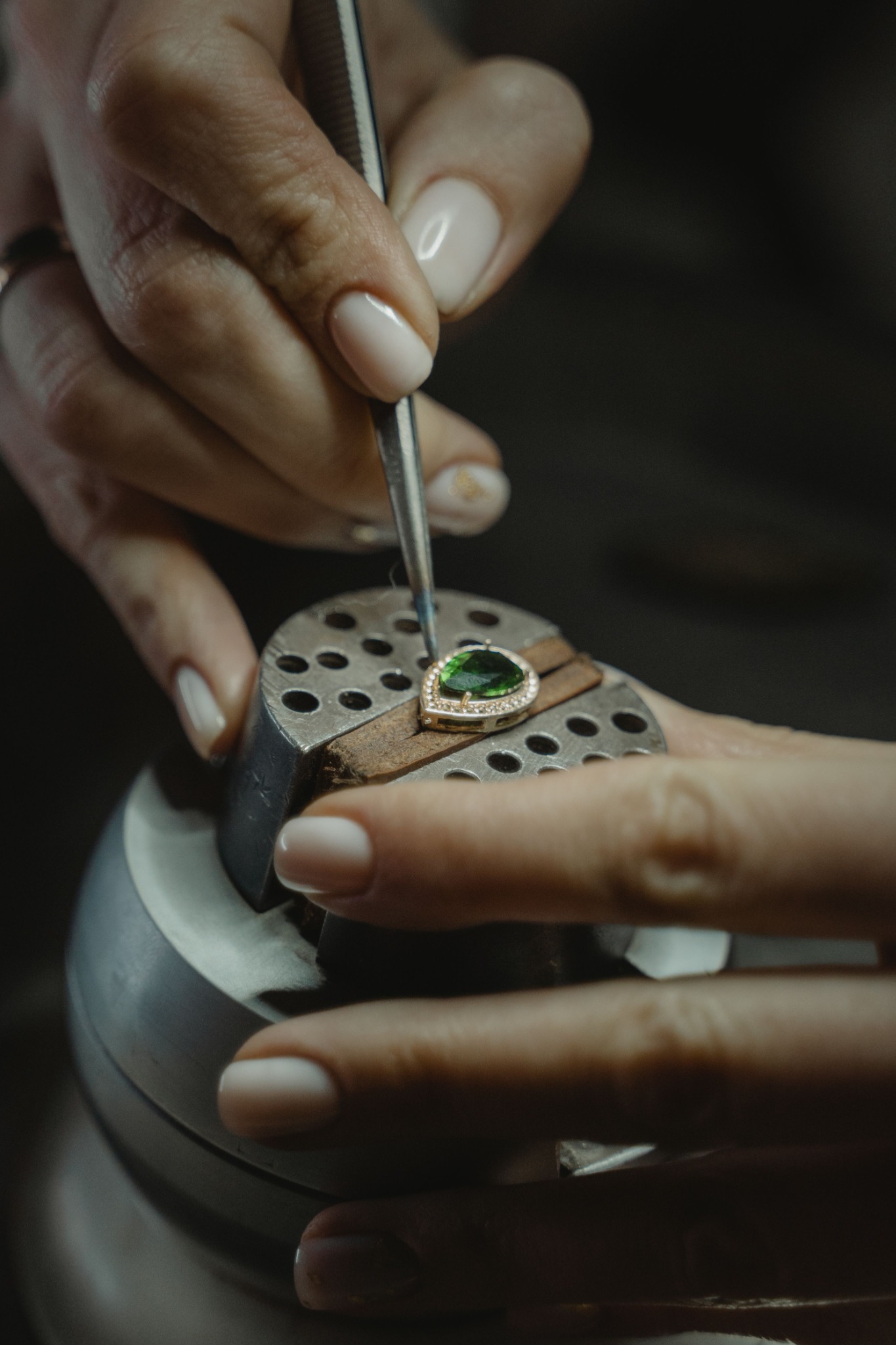
Jewelry stone setting work with tweezers and a green stone held for precise setting
Controlled, small movements are safer than forcing one area down too quickly.
Metal Behavior

Fine Silver Usually Burnishes More Easily

Fine silver bezel strip usually moves more smoothly than sterling silver. It compresses with less resistance and is more forgiving when setting cabochon stones.

Sterling silver can still be used, but it has more springback. If sterling is too work-hardened or the bezel wall is too tall, it may resist movement and wrinkle more easily during burnishing.

Fine silver Soft, forgiving and often easier for traditional cabochon bezels.
Sterling silver Stronger and springier, but less forgiving with uneven pressure.
Work-hardened metal Can resist movement and increase the risk of wrinkles or tool marks.
Wall height Too much metal can fold even if the material itself is soft.
Tool Angle

Control The Burnisher Angle

The angle of the burnisher changes how pressure travels through the bezel wall. If the tool is too steep, it can crush the top edge downward. If it is too flat, it can skate across the surface and leave scratches.

A controlled angle helps the metal move inward and slightly downward toward the stone. The tool should glide, not chatter, dig or jump.

Too steep Can crush the top edge and create sharp folds.
Too flat Can skate across the surface and leave visible scratches.
Controlled angle Moves the bezel inward gradually while the tool stays smooth.
Wrinkle Control

Watch For Wrinkling Early

Wrinkles rarely appear all at once. They usually begin as small waves, sharp compression lines or areas where one section of the wall moves faster than the rest.

If the bezel begins folding unevenly, more force usually makes the problem worse. Stop, inspect the wall height, check the pressure sequence and look for unsupported areas under the stone.
Small waves The wall may be too tall, uneven or moving faster in one area.
Sharp lines The metal may be folding instead of compressing smoothly.
Sudden resistance The tool may be pushing into a stiff or unsupported section.
Stone movement The seat may not be supporting the cabochon before compression begins.
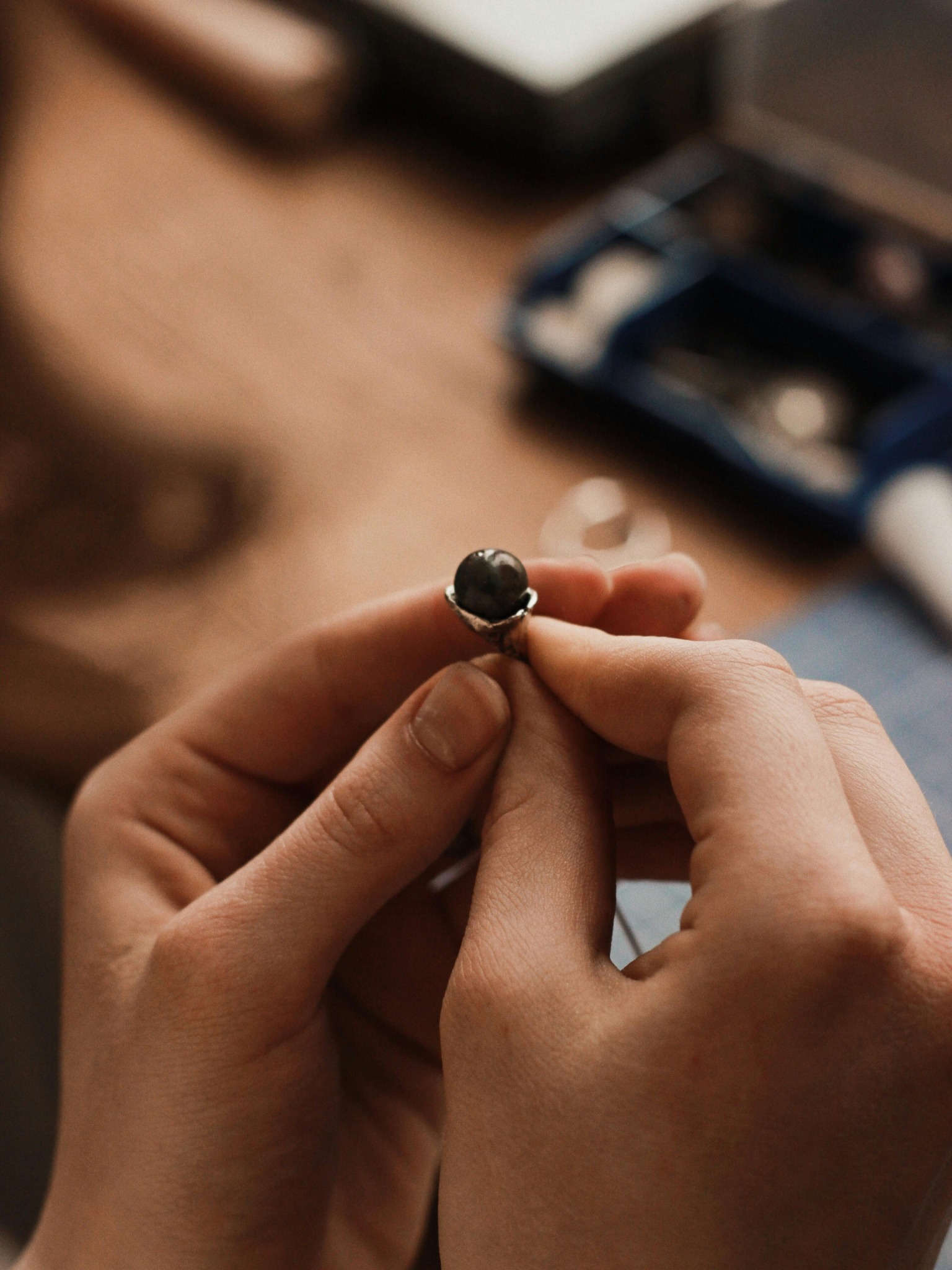
Hand inspecting a bezel set ring during careful stone setting work
Careful inspection matters most when burnishing around softer or more delicate stones.
Soft Stones

Use Lighter Pressure On Delicate Stones

Soft stones such as opal, turquoise, amber and malachite need slower pressure and cleaner tool control. A slipping burnisher can scratch the stone or gouge the bezel in one movement.

Work gradually, keep the tool polished and check the stone often. If the stone shifts during setting, correct the seat before continuing.

Opal Can be sensitive to heat, pressure and accidental tool slips.
Turquoise Can scratch or stain from compound, grit and dirty tools.
Amber Very soft and easy to mark during aggressive setting.
Malachite Needs slow pressure and a very clean tool surface.
Troubleshooting

Common Burnishing Problems

If the bezel does not burnish cleanly, check the tool, the seat, the wall height and the pressure sequence before continuing. Most visible problems come from one of those areas.

Scratches on the bezel Usually caused by a rough, dirty or damaged burnisher.
Wrinkled edge Often caused by uneven pressure, excessive height or springy metal.
Stone shifts The seat may not support the stone well enough before pressure begins.
Uneven compression Usually caused by forcing one area down before the rest is seated.
Distortion after polishing The bezel geometry may have been uneven before final finishing.
Final Inspection

Final Burnishing Checklist

Before calling the bezel finished, inspect the setting under directional light and rotate the piece from several angles.

Stone security The cabochon should not rock, lift or shift inside the setting.
Even top edge The bezel should frame the stone without high spots or collapsed sections.
Smooth surface Look for scratches, tool marks and small compression lines.
Clean reflection The wall should reflect light evenly after burnishing and polishing.

Burnish Slowly, Evenly And With A Polished Tool

Clean bezel burnishing depends more on preparation and pressure control than raw force. A stable seat, smooth tool and gradual compression usually produce the cleanest stone settings.