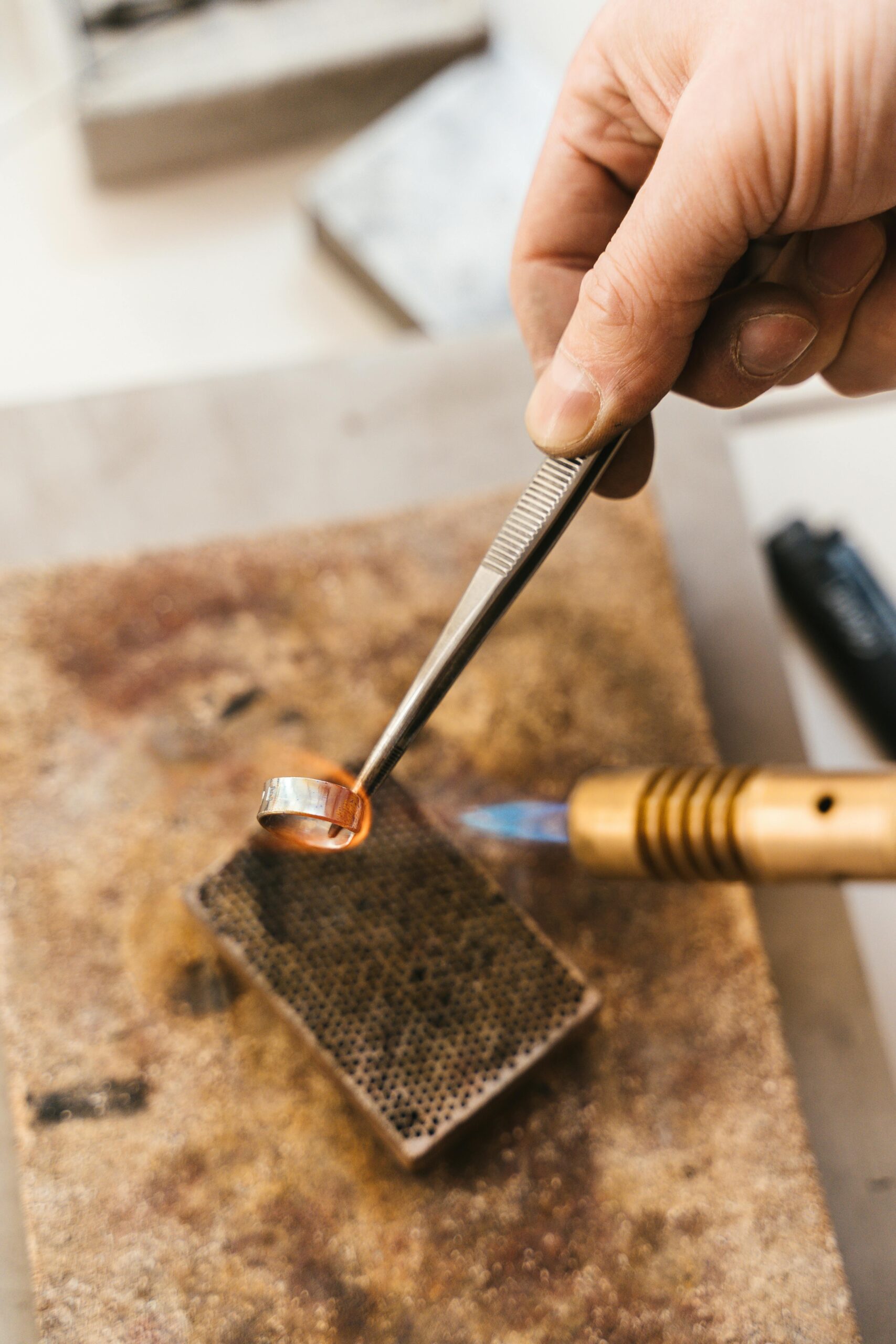
What Does Annealing Do?
Silver becomes harder as it is worked through bending, hammering, rolling, drawing, forming and shaping. This is called work hardening.
Annealing softens the metal again by relieving internal stress inside the alloy. Proper annealing makes silver easier to bend, form and shape without cracking.
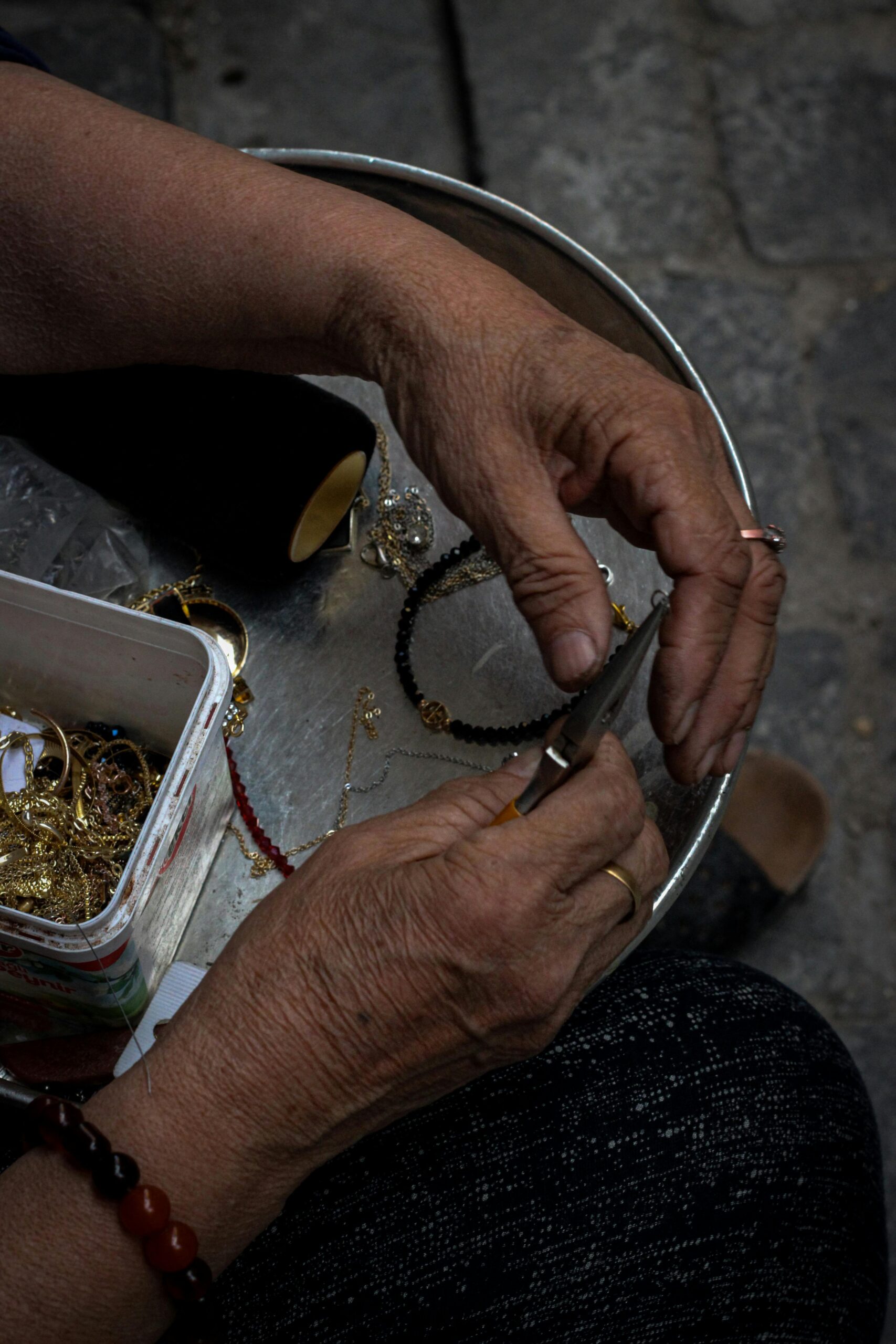
Why Silver Hardens During Work
Every forming operation changes the internal structure of the metal. As silver is compressed, bent or stretched, it gradually becomes harder and less willing to move.
This is useful when you want a finished piece to hold shape, but it becomes a problem when you still need to keep forming the metal.
When Should You Anneal Silver?
You do not need to anneal after every tiny adjustment, but you should anneal when the metal becomes noticeably harder, springier or less cooperative.
Annealing is especially important before major bending, deep forming, repeated hammering or continued rolling reduction.
How Jewelers Anneal Silver
Annealing usually involves heating silver evenly until the metal reaches the correct annealing range, then allowing it to cool safely before further fabrication.
The goal is controlled, even heat. Annealing is not the same as blasting the metal with the torch until it glows dramatically.
Overheating Creates Problems
More heat is not better. Excessive heat exposure can damage the surface, increase oxidation and make the metal harder to finish cleanly afterward.
Thin silver can overheat quickly, especially when the torch is held too close or too still.
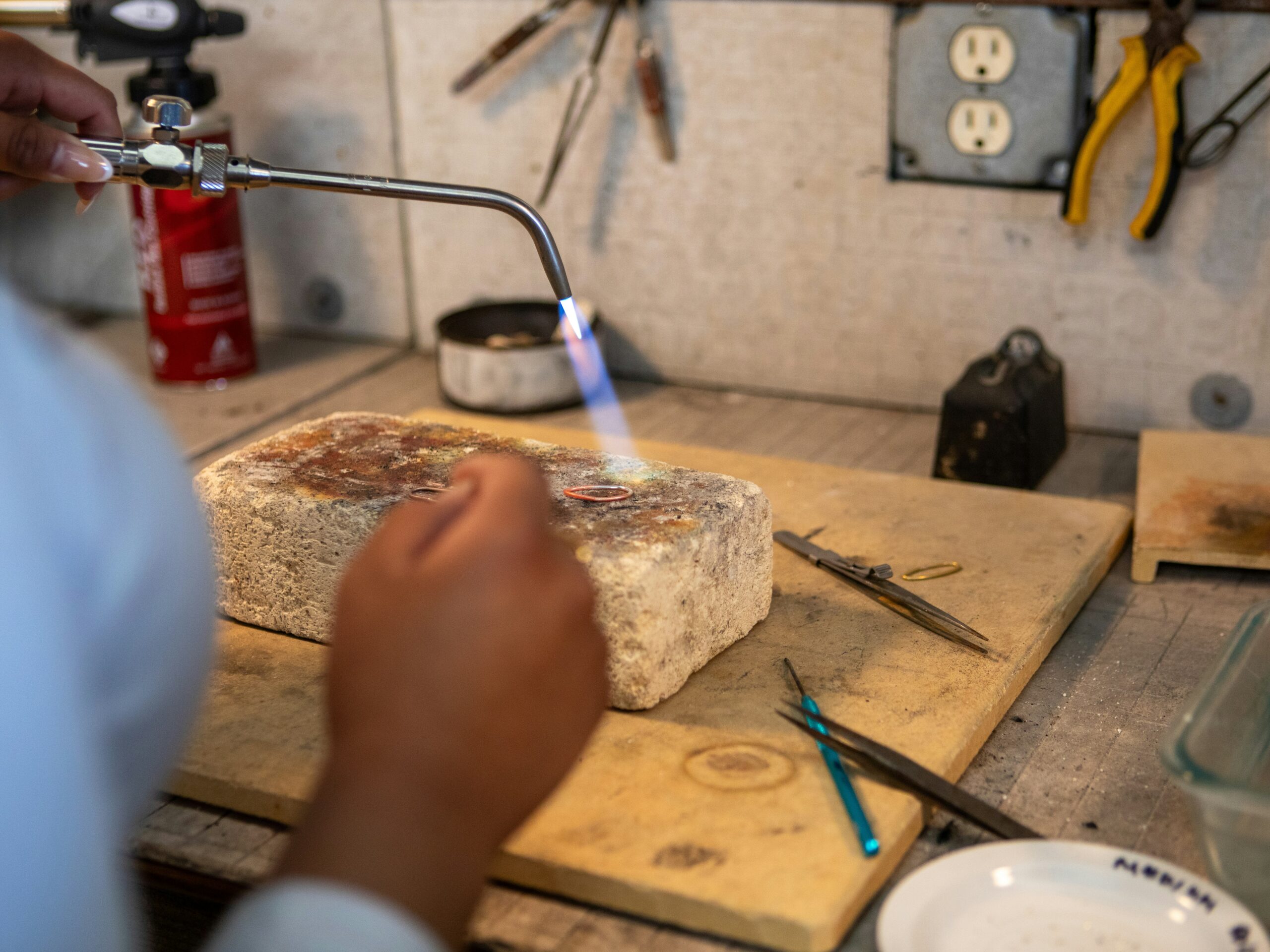
Thin Silver Heats Faster
Thin silver sheet, fine wire and bezel material reach annealing temperature much faster than heavy stock. The same torch setting that feels reasonable on a thick ring shank may be too aggressive for delicate parts.
Adjust flame size, distance and movement based on the thinnest part of the piece.
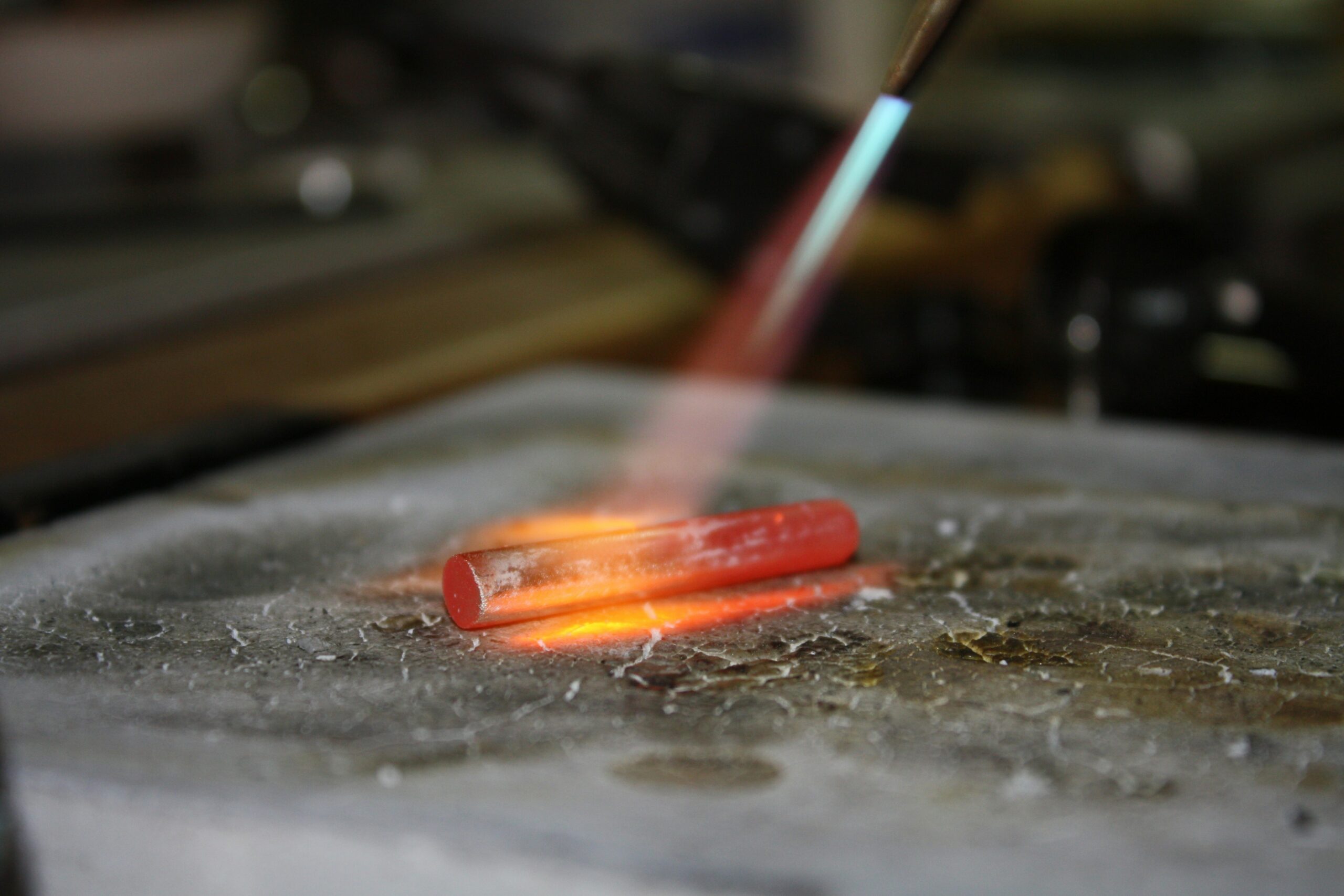
Watch Surface Color Carefully
Jewelers often monitor subtle color and surface changes rather than relying only on time. Annealing temperature depends on the metal, thickness, lighting and torch setup.
Good observation helps you stop before the metal overheats.
Cooling And Pickling
After annealing, silver is usually cooled and cleaned before further fabrication. Pickling removes oxidation and surface residue so you can inspect the metal properly.
Do not judge the surface finish too early. Oxidation and discoloration often hide what the surface really looks like until after proper cleaning.
Quick Annealing Diagnosis
Annealing problems usually show up during the next forming step. If the silver still feels stiff, cracks, warps or shows heavy oxidation, the heat cycle needs to be reviewed.
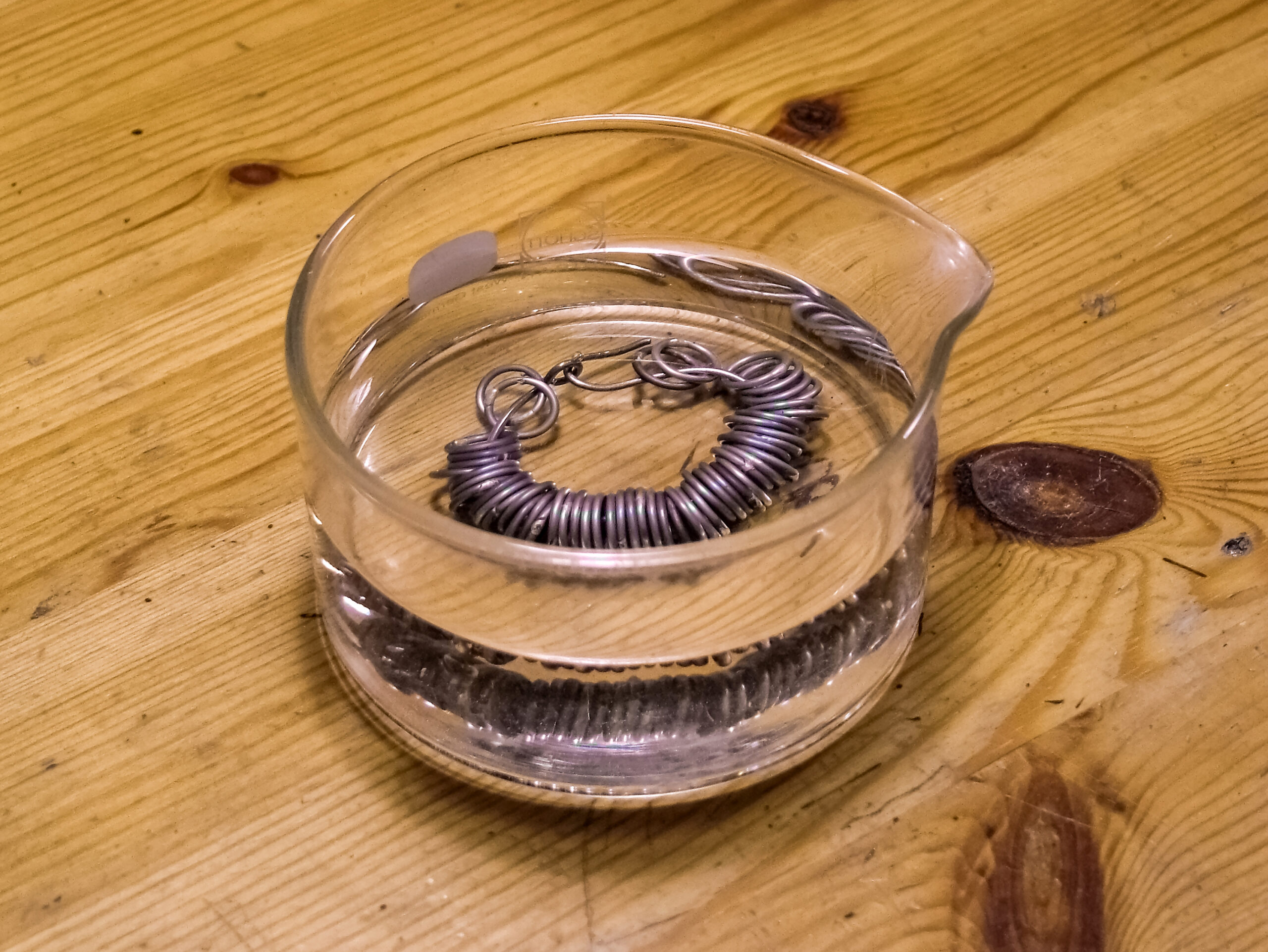
How Professionals Anneal Silver
Professional jewelers usually prioritize controlled heat movement and careful surface observation instead of aggressive flame intensity.
The goal is to soften the silver enough for the next fabrication step while keeping the surface clean, controlled and easy to finish.
Anneal Before The Silver Starts Fighting You
Proper annealing makes silver easier to form, reduces cracking risk and improves control throughout the jewelry making process. Controlled heat, careful observation and clean post-heating inspection usually create the safest results.
Keep Building The Annealing Workflow
These guides connect annealing to cracking, overheating, fire scale and warping prevention during silver fabrication.